.avif)
What is the Best Integration Infrastructure for Partner Ecosystems?
Currently, for B2B SaaS, feature moats are practically non-existent. With the rise of generative AI and rapid development cycles, anyone can copy your core features in a weekend. So, what constitutes a true, defensible competitive advantage? Your partner ecosystem and your integrations.
When your software deeply embeds itself into a customer's tech stack, seamlessly syncing data between their CRM, ERP, and marketing automation tools, your product becomes un-unpluggable.
But scaling a partner ecosystem requires more than simply building connections. It requires infrastructure. Partner ecosystem integrations differ from internal automations in important ways. Internal integrations typically support a limited set of users and workflows within an organization. Partner ecosystem integrations are customer-facing, must accommodate larger numbers of users, and require ongoing maintenance as partner APIs and customer requirements change.
The question product, engineering, and partnership leaders face is: What is the best integration infrastructure for handling partner ecosystem integrations at scale?
Let's look at the options, examine the architectures commonly used, and explore the tradeoffs associated with each approach.
Three Architecture Choices: In-House, Traditional iPaaS, or Embedded iPaaS?
When designing an integration strategy for an app ecosystem, you generally have three architectural paths to choose from.
The In-House Build
Building everything from scratch seems appealing to engineering purists initially. You have total control over the code. However, teams quickly realize that writing the integration logic is only 10% of the work. The other 90% is the infrastructure: managing OAuth flows, token refresh cycles, rate limiting, webhook queues, error logging, and constant API maintenance.
The Reality: Building integrations in-house can be an effective approach for organizations that have reached the scale where they can support a dedicated integration team and invest in the ongoing maintenance required. For companies earlier in their integration journey, dedicating core product and engineering resources to integration support may be more difficult, making alternative approaches worth considering. (For a deeper look at how integration needs evolve over time, see our Integration Maturity Model.)
No-Code Automation Platforms
No-code integration platforms, such as Zapier, Workato, or MuleSoft, were originally designed for internal IT and operations teams. They are effective for connecting internal systems and automating workflows across departments.
Challenges arise when organizations try to extend these tools to support customer-facing partner integrations.
In some cases, companies ask customers to configure and manage integrations directly within a third-party platform. This can create a fragmented experience, requiring customers to leave the product, learn an unfamiliar interface, and manage workflows in an external tool.
In other cases, companies use no-code platforms behind the scenes to build customer-facing integrations themselves. While this can accelerate initial development, the capabilities of the platform can become a limiting factor over time. Teams may encounter constraints around customization, scalability, and support for more complex use cases, which can create friction for both customers and internal teams.
These tradeoffs are one reason many companies view no-code platforms as a strong fit for internal automation, while evaluating different approaches for customer-facing partner ecosystems.
Watch our "Why Integrations Matter" series to hear how product and partnership leaders think about creating seamless integration experiences.
Embedded iPaaS
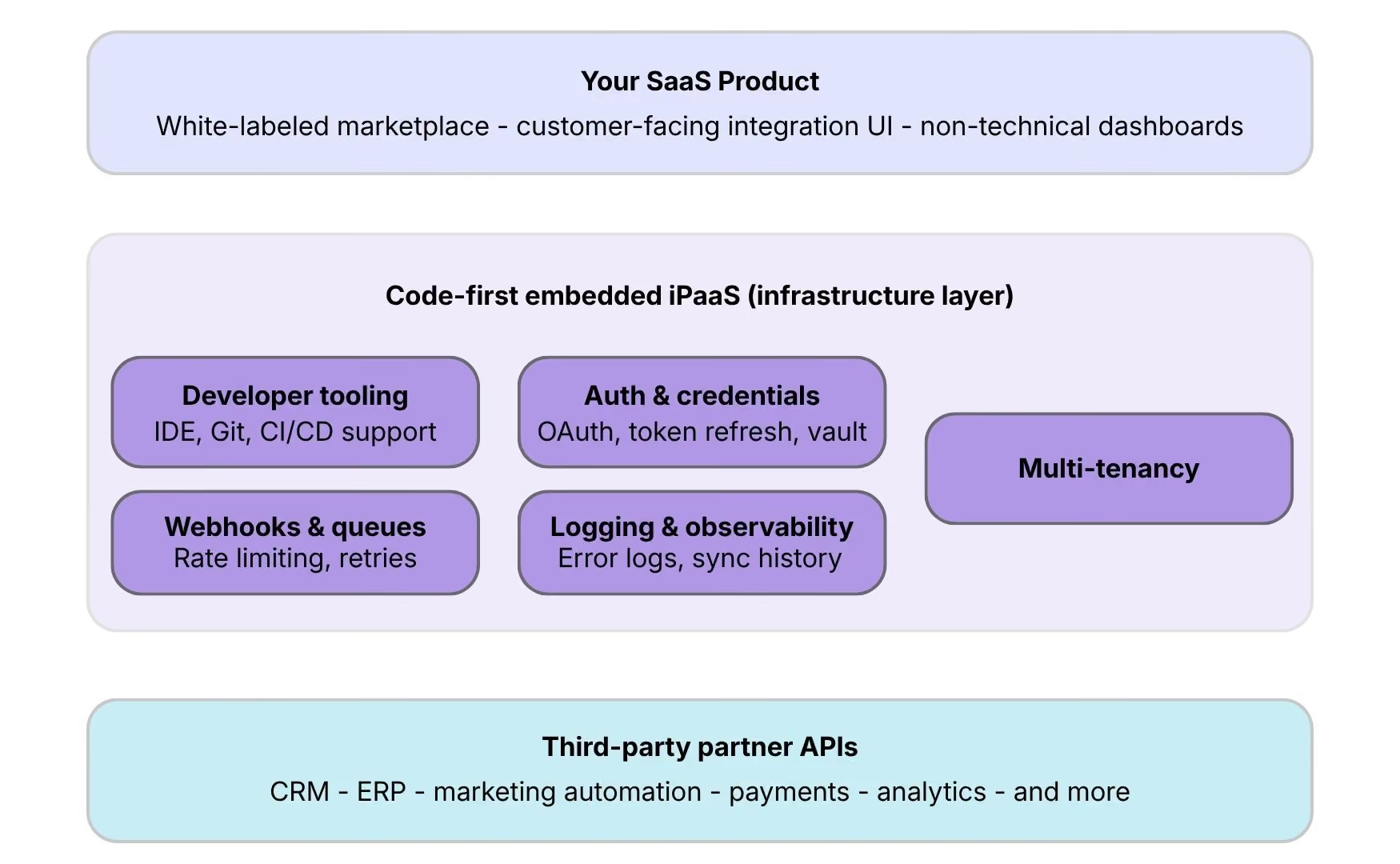
An Embedded iPaaS sits natively underneath your SaaS product as a multi-tenant integration layer. It handles the heavy lifting of connectivity, hosting, and auth management while allowing you to surface a white-labeled integration marketplace directly inside your app.
Why a "Code-First" Embedded iPaaS Wins for Partner Ecosystems
Not all embedded iPaaS solutions are built the same. Many legacy vendors simply wrap a traditional low-code/no-code visual builder in an iframe and call it "embedded."
For a true partner ecosystem, low-code embedded tools fail enterprise requirements. Partner integrations are inherently messy. They involve non-standard API endpoints, custom fields, heavy data volumes, and complex business logic. If your developers are locked into pre-defined visual blocks, they will inevitably hit a wall.
The best infrastructure for partner ecosystems is a code-first Embedded iPaaS. Here is why this architecture wins:
- Developer Freedom Without the Infrastructure Headache
Engineers don't want to drag and drop boxes in a browser UI; they want to write code. A code-first platform allows teams to write integration logic in their preferred languages, use existing IDEs, commit to familiar Git repositories, and run standard CI/CD pipelines. The infrastructure handles the underlying plumbing (authentication, hosting, logging, retries, and monitoring) while teams retain full control over the integration code itself.
Increasingly, this flexibility extends beyond traditional development teams. With AI-assisted coding tools such as Claude Code and Codex, product managers, solutions engineers, and other technical team members can contribute to integration logic without needing to become full-time software developers. This expands who can participate in building integrations while preserving the ability to create highly customized experiences.
The result is a model that combines the flexibility of code with managed infrastructure, allowing teams to focus on the integration experience rather than the operational overhead.
- True Multi-Tenancy and Scale
A partner integration isn't a one-off script. It needs to run safely for hundreds or thousands of tenants simultaneously. The ideal infrastructure provides isolated credential storage, tenant-scoped configuration, and robust handling of webhook queue saturation and rate-limiting spikes without performance degradation.
- Self-Serve Partner Portals
A thriving ecosystem means external technology partners want to build to you. The right infrastructure includes a dedicated partner portal where third-party developers can securely submit their own apps, test against your APIs, upload marketing assets, and view usage analytics without draining your internal engineering resources.
- Non-Technical Visibility (Empowering Support & Success)
When an integration fails, customers don't blame the partner, they blame you. If your integration infrastructure is a black box accessible only to senior DevOps engineers, your customer support team will be buried. The best infrastructure provides a way to surface raw API requests, sync history, and error logs, enabling non-technical teams to troubleshoot or rerun syncs with a single click.
The Verdict? Drive Ecosystem-Led Growth with the Right Foundation
If you want to treat integrations as a strategic revenue driver rather than a product afterthought, you cannot rely on makeshift internal infrastructure or clunky internal IT tools.
The best infrastructure for partner ecosystem integrations is a code-first, developer-friendly Embedded iPaaS. It gives your engineering team the code-level ownership they need to handle enterprise edge cases, offloads the DevOps nightmare of maintaining hundreds of APIs, and gives your customers and partners a seamless, native marketplace experience.
Ready to scale your SaaS partner ecosystem without draining your engineering pipeline? Pandium provides the code-first integration infrastructure, AI-powered code generation, and embeddable marketplaces you need to launch native integrations in days, not months. Reach out for a demo today.
From the Blog
Why Integration Programs Need a Proxy/Passthough API