Generate production ready integration code with AI

Get a working integration in minutes, not weeks, by using AI inside a platform built around the realities of SaaS integrations.
Get started

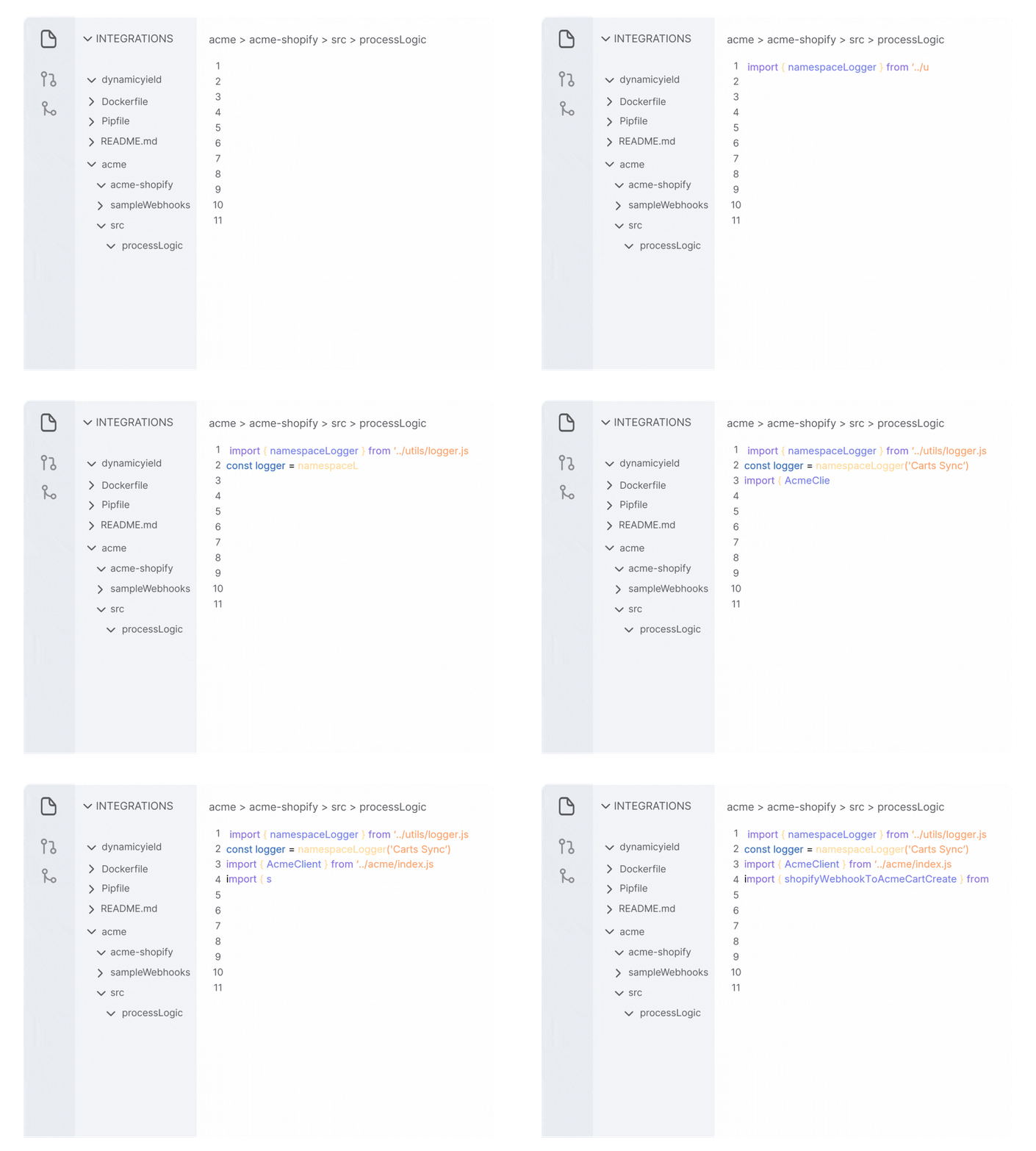
Generate working code in minutes

Select the systems and objects you want to sync, and Pandium’s AI-powered Integration Code Generator does the rest — generating, validating, and committing integration code straight to your repo, where you can edit as needed.

Because it writes code with the context of our infrastructure and runs on Pandium’s API clients, you avoid context-window drift and get integrations that already handle pagination, rate limits, retries, and more.
GitHub repository named acme_to_salesforce showing folders for multiple languages and a code snippet with pipenv commands for Python Salesforce integration.

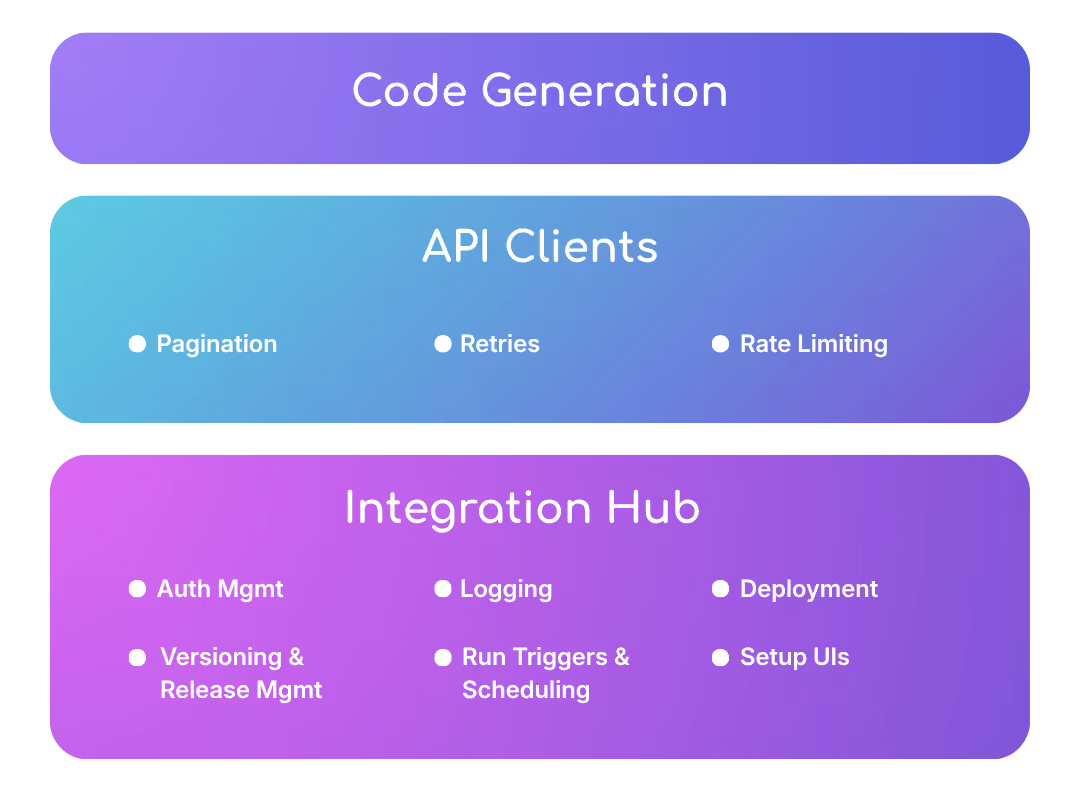
Built-in integration foundations

Pandium gives every integration a structure that is better suited for production use, including managed authentication, project scaffolding, API clients, secret management, logging, and deployment workflows.

Because the platform supplies the framework and constraints, integrations are easier to start and safer to evolve.
GitHub repository named acme_to_salesforce showing folders for multiple languages and a code snippet with pipenv commands for Python Salesforce integration.

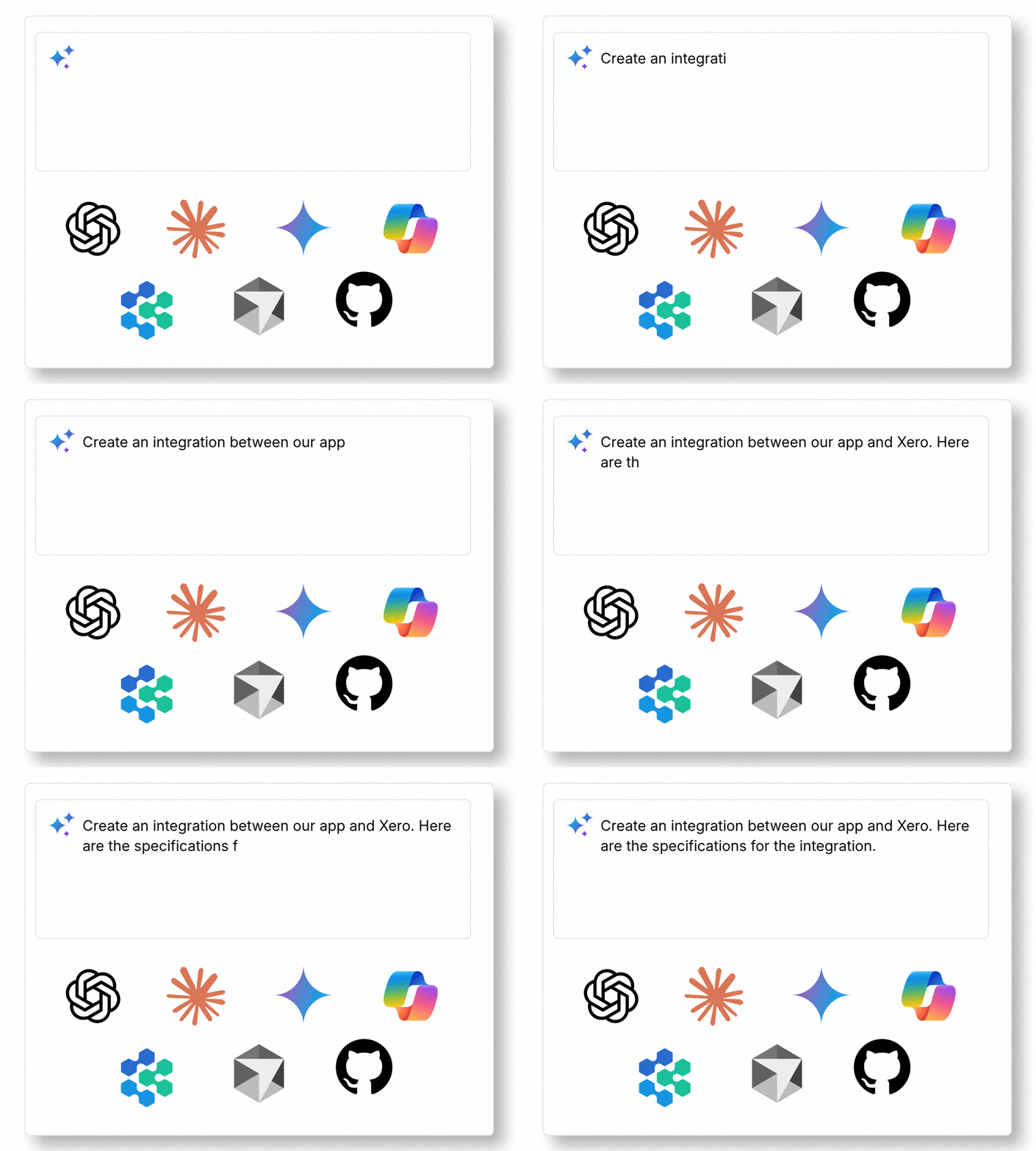
Bring your own coding agent

If your team already uses Claude Code, Codex, or another coding agent, you can use them with Pandium’s platform APIs or CLI. The platform adds specialized integration-specific scaffolding, operational guardrails, and production infrastructure that vanilla AI tools don’t provide on their own.

Using your coding agents with Pandium lets you go from AI-built prototypes to production-grade integrations that deploy confidently and scale with customer demand.
GitHub repository named acme_to_salesforce showing folders for multiple languages and a code snippet with pipenv commands for Python Salesforce integration.

The infrastructure layer for integrations built with AI

API Clients

Includes best practices around pagination, rate limiting, retries and more for each API.

AI Connectors

Pandium includes pre-built connectors for major AI tools including Anthropic, Gemini, OpenAI and many more.

Run-Time Environment

We host your integrations for you, looking after the run-time environment and auto-scaling. Free your devops teams to focus on your product.

Auth Management

Our connectors handle the authentication and security - through public or private APIs, SFTP, or direct database connections. Which means you’re not risking your auth mgmt with AI.

Monitoring & Observability

View activity by customer, integration, or partner. See install metrics. View search activity and page visits. Review sync history, including failed syncs.

Versioning & Release Mgmt

Release management options and versioning make it easy to update your integrations and track changes. Define integration configurations and set customer-specific deployment.

See How Pandium Accelerates Integration Development.

Schedule a demo to see how Pandium helps B2B SaaS teams build, launch, and manage integrations—faster, with more control, and without the infrastructure headaches.
Thank you! Your submission has been received!
Oops! Something went wrong while submitting the form.
Support

FAQs

Some of the most common questions we get asked. Can’t find the answer you’re looking for? Browse all FAQs.
How does Pandium’s Integration Generator differ from traditional low-code or generic AI code tools?
Pandium’s Integration Generator creates production-ready integration code using pre-built, reusable API clients and infrastructure, ensuring the code works in real-world SaaS environments. Unlike generic AI tools that may produce incomplete or non-contextual code, Pandium’s solution is engineered specifically for integration use cases, delivering reliable, maintainable, and testable outputs that fit seamlessly into your existing engineering workflows.
Can I maintain full control and ownership of the code generated by Pandium?
Yes. All code generated by Pandium’s Integration Generator lives in your version-controlled repositories. You can edit, review, and deploy the code using your preferred IDE or the Pandium CLI, ensuring there’s no vendor lock-in and you retain complete ownership and flexibility over your integrations.
How does Pandium ensure the quality and reliability of AI-generated integrations?
Pandium employs a multi-layered validation process: every integration flow is automatically tested for compilation and functionality, then reviewed by your engineers before deployment. The generated code follows engineering best practices, is CI/CD-ready, and leverages Pandium’s proven integration infrastructure for robust performance and maintainability.
What types of integration tasks can the Integration Generator handle?
The Integration Generator is designed to automate repeatable tasks such as data transformation, API call sequencing, and field mapping between systems. It focuses on flow logic generation - fetching, transforming, and syncing data - while core configuration and authentication remain under your control, ensuring predictable and secure integrations.
How does Pandium’s Integration Generator fit into my existing engineering workflow?
The AI-generated code is stored directly in your repository, making it easy to pull into any IDE for further development, review, or customization. The Pandium CLI allows for local execution and testing, and all integrations can be managed through your standard CI/CD pipeline - just like any other code your team writes.
Can non-technical users create integrations with the Integration Code Generator? 
Yes, non-technical users can create integrations in minutes using Pandium’s AI‑powered Integration Code Generator by selecting the systems and objects they want to sync—Pandium generates working integration code automatically.

The Product & Engineering Guide to Choosing the Right Integration Platform

Choosing the right integration platform can make or break your SaaS product’s ability to scale, meet customer demands, and maintain flexibility. This guide walks through key technical and business considerations to help you evaluate solutions based on architecture, customization, scalability, and long-term maintenance.