Leading Product Through Different Stages of Growth
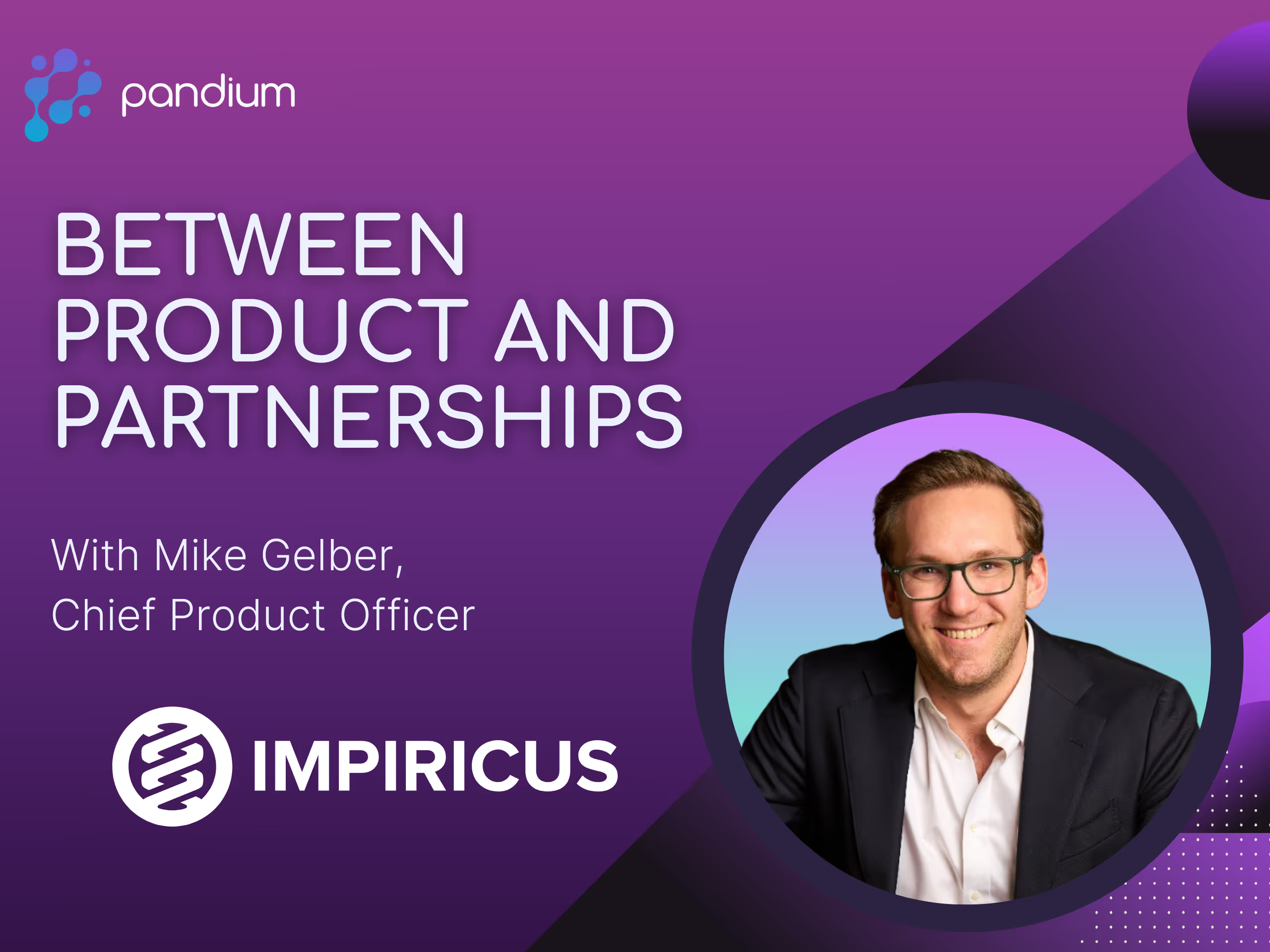
In this episode of Between Product and Partnerships, Cristina Flaschen speaks with Mike Gelber, Chief Product Officer at Impiricus, about his career path and the experiences that shaped his approach to product leadership in healthcare. Mike’s career spans finance, ad tech, and healthcare, and his path into product leadership reflects a steady pull toward roles that combine technical understanding with close proximity to users. Throughout the conversation, he shares how that journey shaped his approach to product, partnerships, and growth in a highly regulated industry.
From Finance to Product Thinking
Mike began his career in finance at JP Morgan, where he quickly realized that the role offered limited room for creativity or innovation. What did capture his interest was the opportunity to build tools that improved how work got done. Teaching himself to automate tasks introduced him to software development and revealed how much leverage technology could provide. That curiosity eventually led him into ad tech, where he stayed close to customers while continuing to deepen his technical skills. Over time, product became the natural intersection point between building systems and understanding how people actually use them.
Why Founding a Company Accelerated His Growth
Starting a company pushed Mike much closer to customers and decision-making, shaping how he thinks about what to build and when. Decisions had immediate consequences, which sharpened his instincts around focus and sequencing. That experience also exposed him to parts of the business he might never have touched otherwise, including partnerships, sales, and legal considerations. Together, those responsibilities formed a more complete view of what it takes to bring a product to market and sustain it over time.
Lessons from Building and Exiting Lasso
Mike reflects on building Lasso and guiding it through growth before its acquisition by IQVIA. One of the most enduring lessons from that journey was the importance of validating demand before investing heavily in software. Early traction came from proving value through direct execution and close customer engagement. That approach shaped how the product evolved and influenced how Mike now thinks about product-market fit. Rather than relying on assumptions, he emphasizes the importance of grounding product decisions in real usage and real willingness to pay.
Services as a Learning Tool
In the early days of Lasso, much of the value was delivered through managed services. This hands-on work created trust with customers and revealed how workflows actually functioned in practice. Those insights directly informed the product’s direction and helped prevent unnecessary complexity. Cristina notes that working this closely with customers often reveals what truly matters, cutting through speculation and reducing the risk of building features that do not meaningfully improve outcomes.
Joining Impiricus and Seeing Product Impact Up Close
After the acquisition, Mike joined Impiricus as Chief Product Officer. At first, he questioned whether SMS could be a meaningful channel in healthcare. That skepticism faded as he observed how physicians interacted with the product in real situations. These interactions highlighted how thoughtful design and well-timed communication could support clinicians in moments that directly affect patient care.
Defining Success in Healthcare Product
Mike describes success at Impiricus as something that shows up both in measurable outcomes and lived experience. Pharmaceutical partners look at the effect on prescribing behavior, while healthcare providers experience fewer obstacles when supporting patients. What resonates most are the moments when the product quietly removes friction and allows clinicians to focus on care. Those moments reinforce the idea that good product design in healthcare is often invisible, revealing itself through ease rather than novelty.
Timing, Integration, and Relevance
A central theme of the conversation is the importance of reaching users at the right moment. Mike explains how Impiricus uses data and integrations to engage healthcare providers when support is actually needed. This approach reduces disruption and builds trust over time. The product fits into existing workflows rather than asking users to adapt to it, which is critical in environments where attention is limited and stakes are high.
Looking Ahead
Mike shares what’s next for Impiricus, including the launch of a new product called Ascend and continued momentum following recognition on Deloitte’s Fast 500 list. Growth is accelerating, and the team is expanding with an emphasis on maintaining close ties to healthcare providers and preserving the product principles that drove early success. Cristina closes the episode by reflecting on how Mike’s journey illustrates the evolving role of product leaders in complex industries. Building meaningful products requires sustained engagement with users, thoughtful partnerships, and a willingness to learn from real-world feedback. This conversation offers insight into how those elements come together in healthcare, where trust and timing are essential and the impact of good product decisions is felt beyond the screen.
Connect with the Speakers
Connect with Cristina: www.linkedin.com/in/cristina-flaschen/
Connect with Mike: www.linkedin.com/in/michael-gelber-290329a5/
Learn more about Impiricus at impiricus.com
--
This podcast is hosted by Pandium, the only embedded integration platform that facilitates faster code-first development of integrations, allowing B2B SaaS companies to launch integrations at scale without sacrificing customization and control.
Learn more about Pandium here: https://www.pandium.com/
To access more resources and content on technology partnerships, integrations, and APIs, check out our blog and resources page below.
Blog: https://www.pandium.com/blog
Resources on Technology Partnerships, Integrations, and APIs: https://www.pandium.com/ebooks