Why Partner Programs Stall and How to Fix Them
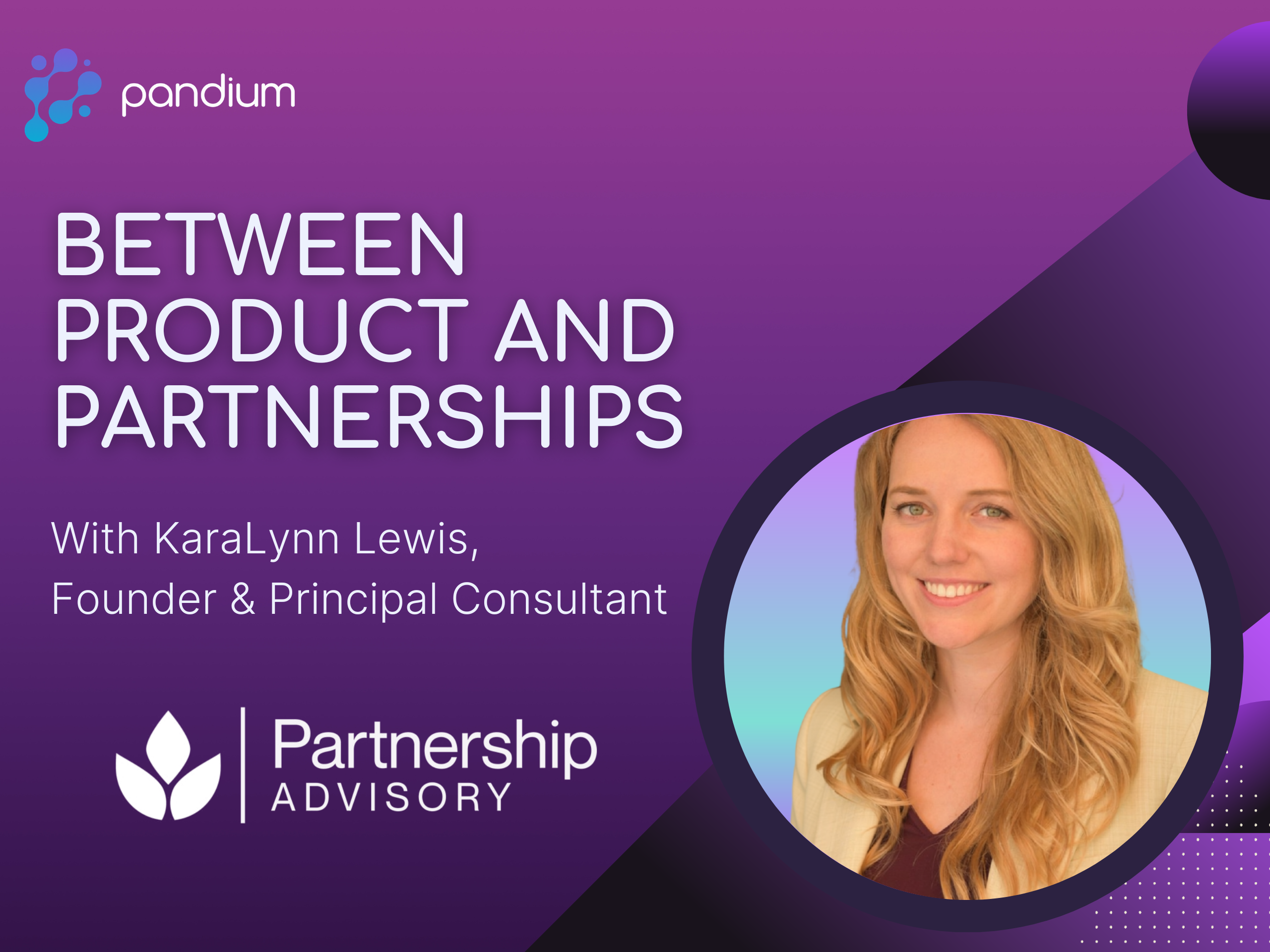
In this episode of Between Product and Partnerships, Cristina Flaschen talks with KaraLynn Lewis, founder and principal consultant at Partnership Advisory, about what it takes to build a partner program that brings in revenue. KaraLynn has built several partnership programs from scratch, and she's seen the same problems pop up again and again. Most of them trace back to a missing strategy or a leadership team that never agreed on what a partner even is. The two also dig into how to choose who to integrate with first and who should own an integration once it ships. They wrap up with a look at why buyers are leaning harder on the partners they trust as AI floods their inboxes.
Who we sat down with
KaraLynn Lewis is the founder and principal consultant at Partnership Advisory, where she helps SaaS companies launch new partner programs and fix ones that have stalled. She's spent about ten years in partnerships, starting as a sales rep who kept hearing customers ask about other tools and wondered why nobody was calling those companies. She went on to build partnership programs from the ground up at SaaS companies in industries ranging from Martech to prop tech. She has also worked in partnerships at an AI company.
KaraLynn brings expertise in
- Building partnership programs from zero to one
- Diagnosing and rebuilding partner programs that aren't producing revenue
- Aligning leadership teams on partnership strategy and scope
- Prioritizing integrations based on the customer journey
- Structuring tech partnerships with both cloud platforms and peer vendors
Key Topics
What "Not Working" Looks Like in a Partner Program
For KaraLynn, the pass or fail test is simple. Is the program bringing in the revenue the company expected? When it isn't, the causes tend to repeat. One recent client had the program change hands so many times that partners never knew who to talk to, so they drifted off to vendors who were easier to work with. Other companies have no real strategy and chase every opportunity that walks in the door. They might land one partnership that works, but nobody can explain why or do it again.
The Staffing Mismatch
KaraLynn sees two hiring patterns trip companies up. Some bring in a senior VP from a big company who knows the strategy cold but is used to having a full team to execute it. Others hand partnerships to a hungry go-getter who spots the opportunity but doesn't have the senior experience to pull it off. Cristina has watched the same thing happen after big funding rounds, when startups hire executives who show up expecting a trained team that doesn't exist yet.
When Partnerships Live in a Silo
A tactical program usually sits under one department. In sales, it turns into a nonstop "where are my leads?" chase. In marketing, it looks like one co-hosted event and then silence. KaraLynn says programs succeed when partnerships are a long-term priority shared across multiple teams. Even companies with a CEO who believes in partnerships can stall when that belief gets handed off to one person working alone.
Alignment Starts in the Leadership Room
For KaraLynn, each project starts by getting the management team on the same page. Put them in a room on day one and you'll usually find different ideas about what even counts as a partner. From there, the team decides what to pursue and, just as important, what to leave alone. Then comes a few small wins with individual partners before anyone talks about scale. If you have two partners and you're copying Salesforce's ecosystem playbook, it's going to fall flat.
Cloud Marketplaces and Peer Partners Need Different Playbooks
Cristina points out how wide tech partnerships have gotten. A partner role today might mean managing a single Snowflake relationship or getting listed in the big cloud marketplaces. KaraLynn treats these as separate motions that may even need different people running them. Working with a big platform like Salesforce means more bureaucracy and giving more than you get, in exchange for outcomes that are easier to quantify. A peer tech partnership opens up a different set of business development opportunities, so it deserves its own goals and its own way of being measured.
Follow the Desire Paths to Pick Your First Integrations
KaraLynn draws on a concept called "Desire Paths". Instead of paving paths where architects think people should walk, you pave where people actually walk. For integrations, that means studying the customer journey. Which tools are around when customers buy, and what's happening when they churn? Sometimes a customer just finished implementing another system and realized they needed you. Add direct integration requests to the mix and you get a priority list built on what customers will actually use.
A Checked Box Won't Carry an Integration
Having an integration listed means very little if it can't do what customers need. KaraLynn has seen teams ship integrations that technically work but miss the core use case, which leaves them basically useless. Partnerships and product need to stay close so everyone knows what a minimum effective integration looks like before anyone starts building.
Who Should Own the Integration?
Owning an integration means taking on long-term upkeep and depending on another vendor, which puts real load on your product team. KaraLynn suggests building in-house when an integration is business critical and you have the resources. For simpler connections, letting the partner build it or bringing in a platform like Pandium can make more sense. Cristina adds that integration product management calls for a different skill set than greenfield product work. Build multi-currency into your product and suddenly you have to translate it across the 14 accounting systems you connect to. And if you ship an MVP integration to capture commercial value, plan for the phase two your customers will eventually ask for.
Partnering in an AI Ecosystem That Hasn't Formed Yet
In traditional SaaS, you walk into an established ecosystem where you can see who your competitors integrate with and figure out where you fit. KaraLynn found the AI space works differently. Everyone is new and propositions shift day to day, so there's very little data on who the right partners are. Cristina describes it as a world where almost everyone is a medium fish, and plenty of those fish will pivot or get swallowed.
AI Noise Makes Trusted Partnerships More Valuable
Some people expect AI to automate partnerships away. KaraLynn sees the opposite happening. With so much AI outreach clogging inboxes, buyer trust is dropping and sales cycles are getting longer. Partners act as trusted advisors and cut down the paradox of choice, since buyers can lean on their friends of friends. Cristina adds that tools like MCP give teams new surface areas to work with, and companies are picking the pencil back up on integration work they hoped AI would handle for them. The more automation creeps into daily life, the more people look for a human they can trust.
Episode highlights
- 00:30 KaraLynn's ten years in partnerships and the sales hunch that started it all
- 02:29 Why a company's partnership maturity matters more to her than its industry
- 04:32 What a broken partner program looks like and the most common pitfalls
- 08:36 Signals that your partnerships are stuck in a silo
- 11:02 Getting leadership aligned, including deciding what you won't pursue
- 14:00 Why cloud marketplaces and peer tech partners need different playbooks
- 16:09 Launch enablement and why every customer-facing team needs to know about new integrations
- 17:19 Desire paths and how to decide who to integrate with first
- 21:04 Who should own an integration after it launches
- 25:39 When a simple MVP integration is good enough
- 27:32 Partnering in an AI ecosystem with no established paths
- 29:56 Why the integration work is still here in the age of MCP
- 32:52 Why AI noise is making partnerships more important
Tactical takeaways
- Get leadership aligned before you sign a single partner
Bring the management team together early to agree on what a partner is and how success gets measured. Skipping this step is one of the fastest ways to end up with a program nobody can steer. - Decide what you won't pursue
Saying no to certain partner types gives every team a clear picture of their role and keeps the program focused. - Win small before you build for scale
Prove your model with one or two individual partners and iterate on what works. Build the machinery to scale only after that. - Keep a consistent owner in the seat
Constant turnover in partnership ownership erodes trust with partners. If they don't know who to call, they'll move on to someone easier to work with. - Spread partnerships across the org
Programs that live only in sales or only in marketing tend to stall. Look for ways to bring product and CX into the work from the start. - Measure cloud marketplaces and peer partnerships differently
Big platforms and peer vendors take different amounts of effort and produce different kinds of outcomes. Give each its own goals and metrics. - Prioritize integrations by following your customers' desire paths
Look at which tools show up when customers buy or churn. Combine that with direct requests to build a roadmap people will actually use. - Match integration ownership to how critical it is
Build in-house when the integration is core to your business and you have the resources. For simpler connections, a partner build or an integration platform can save your product team a lot of pain. - Enable every team before launch day
An integration that CX doesn't know how to support and half the sales team has never heard of is going to struggle, no matter how well it's built.
Connect with the Speakers
Connect with Cristina at www.linkedin.com/in/cristina-flaschen/
Connect with KaraLynn at www.linkedin.com/in/karalynnlewis/
Learn more about Partnership Advisory at www.partnershipadvisory.com
--
This podcast is hosted by Pandium, the only embedded integration platform that facilitates faster code-first development of integrations, allowing B2B SaaS companies to launch integrations at scale without sacrificing customization and control.
Learn more about Pandium here: https://www.pandium.com/
To access more resources and content on technology partnerships, integrations, and APIs, check out our blog and resources page below.
Blog: https://www.pandium.com/blog
Resources on Technology Partnerships, Integrations, and APIs: https://www.pandium.com/ebooks
Podcast Transcript
Sarah Elkins (00:00)
Welcome to Between Product and Partnerships, a podcast focused on bringing together product, partnership, and engineering leaders to discuss how to build, support, and scale SaaS ecosystems. This podcast is presented by Pandium, an integration platform for building native integrations.
Cristina Flaschen (00:19)
Hi, everyone, and thanks for joining us today and listening to our podcast between Product and Partnerships, where we talk about challenges and what it takes to build integrations, partnerships, and all things SaaS. Today, I'm so stoked to have KaraLynn Lewis, founder and principal consultant at Partnership Advisory, join the podcast. We've known each other for a couple of years now, and it's really exciting to be doing this with you. So, KaraLynn, can you share a little bit about your background?
KaraLynn (00:46)
Sure. Thanks so much for having me. So yeah, as Cristina mentioned, we go way back from my journey in partnerships, which has been over the course of about 10 years now. So actually I started my journey in partnerships. I think the way a lot of people start is just by kind of falling into it. But it was actually via a technology partnerships that I really came into it because I noticed that you know, I was a sales rep and I was talking to customers and I noticed that
I would always hear about other technology or other needs. And I thought to myself, why don't we call that other company and tell them that a customer is looking for them? And they probably have customers that are looking for us. So that's what really planted the seed of okay, partnerships can really be beneficial in a commercial kind of way. And that just set me on my journey. So I've really been a specialist in the zero-to-one journey of partnerships. So that's really setting up partnerships from scratch, being the first person on the ground.
I did that in-house for three companies across all different types of verticals. So always in SaaS, but Martech, e-commerce, prop tech were the kind of main segments. And then after the third time around the block, of course, all different journeys, different focuses every time, I really thought that it was a really good model that could be lent more to a project basis. And that's when I started my own company.
So with partnership advisory, I help customers on their partnership journey. It doesn't have to be zero to one. It's also partnership programs that are more mature in their in their status. But basically coming in and using the lessons that I've learned from my career in partnerships to help companies avoid mistakes and be successful in using partnerships to grow their revenue.
Cristina Flaschen (02:27)
And those folks are super lucky to have you. Are there any like
KaraLynn (02:30)
Ha ha ha.
Cristina Flaschen (02:31)
specific verticals or any specific types of companies that you really love working with? I'm just curious for the folks listening.
KaraLynn (02:37)
Yeah, it's really interesting. So it's been actually fairly difficult to define a niche. but I would say that it it ends up being the stage of journey that the customer my customers are in. So either they are looking to start with partnerships or they're very immature and they just, you know, have maybe a few organic relationships and they don't know where to start. That's really where I can help come in and just put them on the right track
and help them avoid the the pitfalls in that sense. But also a lot of times there are other companies that are a little bit more mature. So maybe they already have a first draft of their program, they've been working with partnerships for a while, but it's not working for whatever reason, and they want to kind of re-evaluate that and and see how they can improve. So I would say that it really depends more on the maturity level as opposed to vertical, because in partnerships, although there are
different ecosystems and kind of different pockets where a lot of companies yeah interact with each other. The lessons and the principles are very transferable. and what I really focus on is building out the actual structure, programming and the kind of mechanisms of doing partnerships as opposed to, you know, brokering relationships and stuff like that. So that makes it even more transferable depending on industry. yeah.
And I learn fast so I love skipping between different verticals.
Cristina Flaschen (04:02)
Yeah, we're a horizontal product as well. And like it's fun to see different kinds of industries, even just out of my curiosity, sort of outside of the integration stuff that we do. It's just fun to watch how different types of technologies work.
You said something there
that dovetails into our first question really well. So you said companies that have partner programs that aren't working. So I'm curious from your perspective, like what does it mean when they're not working? And in your experience, what are some of the most common mistakes companies make when coming up with their partner program?
KaraLynn (04:35)
Yeah, so I would say not working is essentially they're not seeing the revenue that they want to come from the program coming. So that's essentially the biggest metric of pass and fail, I would say. Although, of course, there are many subcategories and sub factors within that. But yeah, I would say where I see companies go wrong or where where they're usually going wrong.
For example, a recent client of mine, they had a lot of staff change. So the ownership of the partnership program changed a lot within the organization over the course of some years and that really degrades the trust because they're, you know, someone's doing one thing, then a couple of months later it changes, then there's nobody for a while, and there isn't really an opportunity for partners and the the company or the vendor to really build the relationship there. And
partners get confused and they kind of move on to something else. So that's just one example of how kind of program can go a little bit awry. I would say the biggest factors that really are kind of very standard pitfalls are companies that don't have a strategy. So they just are like, yeah, partnerships could work. They put somebody on it and they go after every opportunity that comes by. So they might have one successful partnership that actually works, but it's not
scalable,
it's not replicable, it's something that is just kind of offhand and it's not predictable at all. sometimes they don't have any investment. So again, they just put someone on it and every time that person wants to do an initiative, they get blocked because it's, you know, just a lead generator and they need to prove themselves and all these kind of things. And I think a lot of that comes down to human resources actually. So from a staffing perspective,
that's also the hole that I try to fill with my own company is that many times you'll get one big senior VP that kind of knows all the strategic stuff, but really needs a big team. So maybe they came from a big company and they were hired for that reason, but that's a very mature programming person as opposed to somebody who's really gonna build from the ground up. And then on the other side, which I would say is much more common, is somebody who's maybe not
rocking it in sales anymore, or someone from customer success who needs a change, or sometimes a really, you know, hungry go-getter that is amazing will come in but just doesn't have the senior level experience to make the type of initiative a success and they flounder a little bit because they see the opportunity but they're just not able or not mature enough to execute. So that's the kind of bridge that I try to gap of a little bit of execution power, but also the strategic level.
experience and can usually pretty quickly identify those pitfalls and steer the company away from
Cristina Flaschen (07:28)
I've seen both of those play out so many times.
KaraLynn (07:31)
Yes, age old stories.
Cristina Flaschen (07:33)
Yeah, yeah, yeah. And
in all different parts of organizations, but partnerships too, right? I see it a lot in go to market also when companies like startups raise, you know, their Series B and bring in like an executive as a CRO, VP of sales, VP of partnerships. And like that person to your point is used to having like an entire group around them to be able to that's already like trained up to execute and that can be a mismatch. And to your point, obviously if you grab someone who's just like brand new in the role and you're like, go forth and strategize.
That's not always the
KaraLynn (08:03)
Yeah.
Cristina Flaschen (08:04)
best thing either. I'm curious if there are like signals that you're able to identify that point toward either of those two things, right? Like either companies are thinking about it like too tactically or thinking about it too strategically, so that folks that are listening can maybe look at, you know, if they have these challenges internally, look for some of those signals to be like, maybe we need, you know, some frontline folks, or maybe we actually need to step back and think about the strategy more.
KaraLynn (08:29)
Yeah, I would say looking at the kind of yeah, I don't know if I would say partner lifecycle but how partnerships is threaded throughout the organization. So if it's tactical, it's typically going to be seen, I mean, most often as a sales channel, but it's gonna be really siloed underneath another department. So I've also seen this, for example, in marketing where the it's more like a brand partnership where they'll collaborate with an organization, but they do an event and then it kind of that's it. There's no real
mechanism
linking those two companies other than the marketing initiative. And then with sales, it's where are my leads, where are my leads, where are my leads. And that again is also kind of degrading the relationship, the broader relationship between the between the partner and the original vendor. So I would say if you see if you have partnerships as this kind of strategic thing or strategic vision, if it's a long term aspect that's also threaded
between multiple departments, that's where you see more success as opposed to having it siloed within an individual department. From the other direction, it's a little bit difficult because I do see the more companies falling into the tactical
Cristina Flaschen (09:44)
Mm-hmm.
KaraLynn (09:45)
problem. Like it's less that we have an amazing strategy, but I would say that
that's the only issue that I do see is that there is a good vision of we know that partners can work for us, but then it doesn't translate into execution. And that's usually when the maybe the CEO is a kind of believer, but then immediately puts it onto someone who's in isolation responsible for partnerships. So it's again not threaded through the organization on an execution level.
Cristina Flaschen (10:16)
And how do you correct?
Or I guess like if you come into an organization where you feel like there isn't a holistic approach, which is what, you know, as you said, like threaded through an org, like what are some ways that you would start to correct that? Like it just, again, as someone, we do technology partnerships, we focus on that and integrations. But like, you know, when an integration is launched at a company that is doing tech partnerships the right way, in my opinion, it does touch like so many parts of the org. How do you advise companies to start to implement that?
I guess it's part of kind of like the DNA of an org, right?
KaraLynn (10:51)
Totally. Yeah. I think the first thing, and that's what I always include as part of my project, is really getting alignment from the management team essentially on the approach. So understanding, and it sounds a little bit kind of simple, but it really is a very important step that usually gets skipped is that if you bring the management team into a room on day one, they usually have a different idea of where the opportunities are, what a partner is.
You know, a definition level, all these very simple, quote unquote simple things that yeah, just aren't aligned with organization. So getting that alignment and also showing them, okay, there's these opportunities, like laying that all out, and then also deciding where we're gonna pursue and where we aren't going to pursue. And that's a very critical thing because oftentimes in partnerships, because of all the different, you know, visions of what success can be,
Cristina Flaschen (11:46)
Mm-hmm.
KaraLynn (11:47)
there's there's no alignment on what the way forward is. So deciding on what not to choose really does focus the whole organization on, okay, this is what we're doing. I understand, I understand what my role is. So I think the the alignment from the top is the first key thing. And then the other or when the execution phase starts out, I actually think getting a couple of small successes. So really focusing on okay, what can we do with an individual partner right now? What is our model? Because
trying to build something scalable. Like if you're copying Salesforce's partner ecosystem strategy as somebody who has, you know, one to two partnerships, it's just not gonna work for you. So really picking your lane and then making that lane a success, iterating on that and then only looking to scale.
Cristina Flaschen (12:36)
Yeah, that's such a good point. I feel like when I started doing, you know, integration work and then partnerships wasn't really called that, but when, you know, when that kind of started, it was always SaaS to SaaS. And now that we have like number one, these huge SaaS companies that like a partner role can be just managing your Snowflake relationship and also the cloud marketplaces, like the AWS Azure, GCP kind of realm.
Even just within technology partnerships, there's so much variability. And to your point, I think like if you say, we're gonna go after like, you know, partnerships with Shopify and Netsuite and then also with Snowflake, and then also we're gonna be listed in the GCP app store, like those are such different things. And trying to do all of that at one time is technically difficult, like from like an integration perspective, but also operationally and commercially really difficult. And as a small company.
I you know, I don't know what's best for every company, but I always get nervous when I hear companies talk about like hitching their wagon onto like one of those big partners alone. But you kind of have to if you're a small company. It's really hard to manage all of those, right? Or you pick to diversify amongst the smaller ones first. I don't know if you have thoughts just came to mind.
KaraLynn (13:48)
Yeah, no, definitely.
And I think that's also a crucial decision that needs to be made. I mean, it can be done sort of simultaneously, but I almost see also that as a a two different approaches. Like take the ecosystem thing and don't necessarily invest in the big guys, or you know, do it enough that you have a minimum viable relationship
Cristina Flaschen (14:08)
Mm-hmm.
KaraLynn (14:09)
there, but you're not necessarily going to be investing all your partner relationships in it, or if you really have a good proposition
which is also sometimes quite challenging for a small company, then it's perhaps the best decision to really double down on that and you can really see it. But even when it comes to partnerships, totally different roles, potentially even two different profiles that you need to have working, because one is really more of an account manager that needs to wear all of the hats of that customer role, and then the other one is going to be
dealing
with more of the kind of ecosystem structure with multiple different types of partners. So yeah, it's a very, very different length. And I think lumping in a cloud provider, for example, with you know other peer solutions, it's a not a great idea because it's just so different on an operational level. Like working with Salesforce
you need to be aware that you're giving more than you're getting from them necessarily.
Cristina Flaschen (15:07)
Mm-hmm.
KaraLynn (15:08)
You're working through a lot of bureaucracy. You're going through you know, you're jumping through a little bit more hoops, but then you get a kind of certain outcome that perhaps is you can quantify a little bit better. Whereas a normal technology relationship with a peer, you're selecting them on a different basis, you're doing different things with them, you have a lot different opportunities in terms of
business development activities, it's just a totally different framework and also therefore shouldn't be measured or evaluated the same way as well, in my opinion.
Cristina Flaschen (15:40)
Yeah, and this all reminds me of like this being a top down exercise, right? Because I could totally see like the CMO like, We need to be in the Azure shop. And then the CRO is like, I just need leads. And like, you know, it's just a different it's a totally
KaraLynn (15:51)
Yeah, yeah, yeah, exactly.
Cristina Flaschen (15:53)
and I mean you get you know, the goal is leads all the way, all the way through, but or you know, higher NPS or whatever. But this also reminds me for our audience we had a great podcast with Therese Stowell, I believe, who was from Annaplan and she is a launch product manager. So like
Her entire job is managing product launches, including integrations. And it kind of reminds me of that threading through an org. Like she does regular PMing, but really it's about like launch enablement. Like we're gonna launch this integration, we're gonna launch this product, like who needs to be involved, who needs to be enabled, who needs to get excited, who needs to be able to support it. Like the amount of times I've seen
integration partnerships launch and like the CX team has no training, no idea what's going on. Like the sales team, half of them know, and they've been talking about it, the other half doesn't. Like that is so important for the continuity and the success of all of the work that the partnership people are doing too.
KaraLynn (16:47)
Definitely.
Cristina Flaschen (16:49)
Gotta treat like first-class citizens. so let's talk a little
KaraLynn (16:51)
Yeah.
Cristina Flaschen (16:51)
about integrations. You know how much I love this and getting to talk to folks about it. So,
KaraLynn (16:54)
Course.
Cristina Flaschen (16:55)
how should companies decide who to integrate with first?
KaraLynn (17:00)
Yeah, so a big of course, strategic question, which I love. So in that sense it's top down, but in in another sense, it's also very bottom up, or at least I like to look at it in a bottom up way, because at the end of the day, you can have, you know, a ton of commercial opportunity with one company. But if no one's going to be using the integration or if it's no good, it's probably not going to work and it's not going to deliver any sort of effect. So I try to look at it in a kind of
from
a customer value perspective. I don't know if you've heard of desire paths, but it's some kind of old study where basically they have a architectural design on a campus and they first allowed the students to just walk over the grass. And then instead of paving straight lines, they paved just where everybody walked. So usually it's diagonally instead of straight or where a kind of design person would put the paths. So that's how I really approach developing a kind of ecosystem strategy.
Where in our customer journey, who are we playing with at any given point? What's happening when our customers are churning? Who's around there? What kind of tech is at play? What about when they're buying? Have they just finished a project implementing another solution and have realized that now they need us, for example? So really understanding what's happening, what triggers there are, what we what our project is triggering them to go look for.
What are they missing? All of these kind of things. That's where I really prioritize the integrations. And of course, you also get the direct data of X many requests. We know we need to have this in a certain territory. We need to have the local player, something like that. So putting all of those different data pieces together and really focusing on which tech is going to be the most valuable to our customers.
This can also be done on a categorical level as well as within categories. So, for example, you might have an ecosystem with five different types of technology. And then, of course, within that, do you only want to integrate with one or do you want to integrate with all of them? Seeing kind of which integration is going to give you the most value. and then something that I think is sometimes a disconnect between partnerships and products.
Is that integrations are not just a tick box. Like just because you say you have an integration, it doesn't mean that it's actually going to work because your team could develop an integration that you know works but doesn't actually do what the customer needs to do, and then therefore is rendered essentially useless. So really having that close relationship with the product side, understanding the customer needs, understanding what
at a minimum is gonna make this integration an effective one is also just as important as deciding who to integrate with because yeah, even if you launch your integration, if it's not done correctly, it's not gonna do the job that it's that it's made for.
Cristina Flaschen (19:58)
So here's a question. Who do you think should own?
Like you talked about a bunch of criteria in the beginning about like how to figure out, you know, who to integrate with first. And then you just talked about also like the functionality of the integration once you select the system. Who do you think should own? And maybe it's multiple parts of the org, that all of that requirement gathering and information gathering around like to your point, like who's there when we churn, like who are the local players? And then also how should this integration work? Like
who at a company should do that? Is it you, KaraLynn?
I'm just kidding.
KaraLynn (20:31)
So tricky. Definitely definitely
not me. Definitely would need my product
Cristina Flaschen (20:35)
Yeah.
KaraLynn (20:36)
sidekick at least. But it's a really good question. And I think this is also where the complexity of an ecosystem, like when you look at technology partnerships, it seems simple, right? Like you just, yeah, build an integration, then you're together, boom, everyone's happy. But an ecosystem can also be very multifaceted and not necessarily be a one size fits all.
So I think it's really important when you're considering that ecosystem strategy to also determine okay, what is actually the best way of going about maybe each individual integration or in maybe category or whatever it may be. So I would say if you're going to own an integration, because of course that's load on your own product team, you're responsible for upkeep. You have to have basically it's a product that you're launching. That should be business critical and also a lot of internal product
companies, as I'm sure you are very familiar with, don't like integrations, owning integrations because it means that they are dependent and needing to work with the other vendor, which internally vendor product people are not necessarily required to do and it makes it more complicated. So that's a huge commitment for a company to take on, but is sometimes worth it because then you have the control, you have the ability, you can get it done if you've got the resource also. That's another critical question.
And then other ways to do it are okay, maybe you want to outsource it or let the other vendor do it if maybe it's not so critical for you, or if it's a simple one. Of course, there are products, great products like
Cristina Flaschen (22:05)
Mm-hmm.
KaraLynn (22:05)
Pandium that can do the the job well and kind of sit between and and have that kind of area of ownership where things can all yeah, be sorted essentially. So I think really understanding what does this integration mean to me and to my company.
And what is gonna be the path of let's say least resistance, but also best security, so that it doesn't become a burden on the company because that can also give issue to customers, which is of course not what you want. And also it can fray the relationship between the two vendors because
Cristina Flaschen (22:42)
Mm-hmm.
KaraLynn (22:42)
if you're constantly dealing with product issues, it's not something your salespeople are gonna recommend. Just not it just does is not.
Cristina Flaschen (22:49)
Yeah, yeah. It's it's so interesting because to your point, I think like product management for integrations, which could is also sometimes called like solution management. And there's a different words that people use because integrations aren't products, even though like to me they they are, obviously.
KaraLynn (23:03)
Totally.
Cristina Flaschen (23:05)
Is like a kind of a different skill set than like greenfield product management. And we find so often that like some
random person in an organization that just like is interested in the problem ends up sort of taking it on. And I think it can be both
less complicated and more complicated than building internal product. Like internal product at like a mature company, there's obviously like a lot of process to get around. But you're kind of able to do like quote unquote whatever you want, right? Versus to your point, the dependencies that exist with working with external vendors is like just a totally different kind of management exercise. And the places that I've seen be really great at this do have like a sort of dedicated either person or handful of people that
a lot of times they're considered like solutions or professional services or like something outside of the core product org that are like adjacent to them. that work on these projects like exclusively. I, you know, I've done that a billion times in my my career. That's been my whole career is doing that because I like this stuff. But I do think that to your point, it's like it's a challenge that's slightly different than like, we have customers asking for us to do multi-currency, like go build multi-currency within the confines of our
product. Then it's like, actually we built multi-currency and now we have to translate that out to the 14 accounting systems that we integrate to. Like that becomes a new challenge, right? That companies often don't think about. It's like, yeah, it build an integration. I'm like, well, what does that mean exactly to you? Like and sometimes
KaraLynn (24:32)
Yeah.
Cristina Flaschen (24:34)
I think, and I'm wondering what your thought is, sometimes getting that MVP, I think like you mentioned with the large like cloud
marketplaces. Sometimes it is enough to get the commercial value. And it's sort of like you just need to have something that gets you there. But if your customers actually start using it, I would I would say to organizations, if you're going that MVP route, just remember that that means that there's a phase two.
KaraLynn (24:58)
Exactly.
Cristina Flaschen (24:59)
And you don't want it to just be like languishing after you have a hundred customers on it. I don't know if you have any thoughts there.
KaraLynn (25:04)
Totally. Well,
and it's also as you say, it integrations, I mean, they can be a very complicated can of worms, but they can also be quite simple. Like ticking a box sometimes can work if, for example, all you need is a a very simple data transfer. Like one of the companies I worked for before it was really just CRM data. and
Cristina Flaschen (25:24)
Mm-hmm.
KaraLynn (25:25)
that ended up being very simple because it was already in whatever system it was, and then it was very easy to kind of translate out. So
it was super fast and quick to be able to develop a lot of integrations because this it you know it's like a four hour connection kind of thing and
Cristina Flaschen (25:42)
Mm-hmm.
KaraLynn (25:42)
the the problem is solved. Whereas other integrations that I've seen, you know, you're kind of integrating it so that you're using one product while you sit in another. I mean I'm getting way out of my my product depth here, but yeah, integrations do not all come the same.
and so that's why listening or understanding what the customer need is is really important because integration between two products can mean anything under the sun. so you have to make sure that you're integrating the right aspects that actually service your customer.
Cristina Flaschen (26:16)
Don't I know it, KaraLynn. Don't I know it? it's
KaraLynn (26:19)
I can imagine, I can imagine. This is your day to
day.
Cristina Flaschen (26:22)
It's so fun.
I love it. I mean, that's part of what I love about it, right? Is the different like shapes that these things come in.
KaraLynn (26:27)
Definitely.
Cristina Flaschen (26:28)
So we're coming up on time, but I wanted to talk to you about AI. So you worked in partnerships at an AI company, and I'm curious how the word partnership and the role of partnerships and the place of partnerships is different in an AI company versus a more traditional SaaS company. And I know every company is an AI company now. So maybe the question is: how are partnerships
KaraLynn (26:50)
Mm-hmm.
Cristina Flaschen (26:51)
different now in the age of AI?
KaraLynn (26:55)
Yeah, definitely. So working within the AI space, I mean, it's a fairly I mean the AI people will say that it's not new, of course, but with a lot of AI focused companies really popping up, it's a totally different world actually. And it was really interesting to explore that space because typically where I've come from, let's say traditional SaaS, you are already entering an ecosystem. So you're somewhere positioned in this ecosystem, what whether you're
A big fish or a small fish or one of the clouds or whatever, you can kind of see you see your competitors, you see who they're integrated with, you see who they're working with, et cetera. and then you can find your place and play off those existing dynamics. Whereas coming in from the AI space, they actually don't necessarily have those paths or connections because you know the competitors that they have are also new, everybody's still figuring out their identity. So
even though it's a very quickly growing space, it's not an established space. So essentially every position is up to play. And nobody knows how that's going yet. So it's very different partnering than a traditional SaaS company would be. And I think interestingly as well, the other so other technologies, but also the service providers and the customers are still all figuring it out and things are changing day to day. So coming in
to a brand new kind of greenfield ecosystem is also a very different partnership approach than coming into an established ecosystem essentially because there's no data to go off of of who's going to be the right partner for you. Which is yeah, a really interesting space. And I'm quite curious as well as to how it's going to develop and what that AI ecosystem will look like in a couple of years.
The other aspect of that is also that many companies now are, of course, are using AI to build their own kind of processes and agents and all these kind of things. So I'm quite curious to see how that transpires when it comes to, okay, if you build everything on Claude, but with just yourself, how are you going to integrate that to your one SaaS product that you really need? Or
yeah, how that might work. Maybe you also have some already s seen some things or have some thoughts on that.
Cristina Flaschen (29:16)
Yeah, I mean coming out of Catalyst last week, everyone was, you know, MCP is still like I think the big term because it sort of encompasses like agentic and Claude Cowork and all that stuff. And I think for us, or for me being an integration practitioner for life, like a lot
KaraLynn (29:36)
I love that integration
practitioner.
Cristina Flaschen (29:38)
Integration I just
made that up. Is like this stuff is all integration is all the way down, but there's like different surface areas now to like interact with external tools. And I think really to your point earlier, really understanding what your customers are trying to do.
Like really understanding what they're trying to do and not trying to shortcut it just because you now have this new set of tools is important, right? Like there are places where an MCP can replace like a native integration or you don't need as much functionality in your own product because you can use this other thing. But there are also places where it definitely does not and it won't be for a very long time. So I do think a lot of companies, and maybe you have some thoughts on this too, there's still a lot of folks that are kind of like wandering around like
hoping that a lot of the AI stuff will just eliminate the need to do a lot of the work that we've been doing, both in integration development and partnerships. And that that hasn't come to pass. And I don't think it's going to 100%. So I do think that we're in this phase where folks are like picking the pencil back up and they're like, okay, like we're gonna, we're gonna start doing what we did 18 months ago again. It's gonna be augmented because we have these new tools, but it's not like
all of this stuff came in and just is like, we don't need partnership people, we don't need integration, we don't need engineers, like everything has changed. I'm like, things have changed, but not in that dramatically of a way. Which, you know, you've been in tech for a long time too. Like that is sort of predictable, but like it changes, but it it's additive and iterative at a certain point. It's not just like wiping the slate clean. So I don't know. I mean, I think it
I think too, with your point about the ecosystem, I haven't really thought about how it's like so big and open and there isn't like a there isn't a hierarchy yet in a meaningful way. Like obviously there's like the big model companies, like Claude is not building into you, SaaS company. But other than that, I mean everything is sort of equal and so many of the large players in the space are still very new. And they may have 2,000 employees, but they're still kind of operating in that post series A way. And so I I can only imagine
Imagine for you the companies that you see kind of like that jockeying of like who's the big fish? Like everyone's a medium fish in the cloud. Like like Yeah, yeah, yeah.
KaraLynn (31:49)
Well, and evolving as well because they are they're
changing their proposition, of course, when it comes to day to day.
Cristina Flaschen (31:56)
Yeah, and so many of these companies are pivoting and like we'll be here, won't be here, we'll be gobbled up by other fish. It's like, yeah, it's just the wild it's the wild west out there, man. It's fun. It's fun to watch though. I love seeing these kinds of shifts, like
KaraLynn (32:08)
It is. And I think as well from the partnership perspective, it's actually, I mean, there's a lot of kind of hype and and all these things, but it's more how companies are using AI. So with AI outreach and AI processes and all these things, I actually see the need for partnerships becoming even more paramount. So, you know, many people, as you say, yeah, you don't need a partnership person because you can automate it and all this kind of stuff. But at the end of the day, there's so much noise and I think that
the amount of trust that customers have with new products is going down. And I see that a lot with the many companies that their, you know, sales cycles are getting longer. It's a lot more tough to really convince someone or kind of let them understand how their product is going to help them because they're wary that they don't want to invest in something that yeah might not work out. And I think with partnerships, it's also the trusted advisor. It
Cristina Flaschen (33:02)
Mm-hmm.
KaraLynn (33:03)
also reduces the paradox of choice. So as you I'm sure see every day, if you're not integrated with my, you know, main player here or my foundational tool, it's not going to work out. So it reduces that amount of possibility that you have. And at the end of the day, you're then looking at a pool of the your friends of friends, essentially,
Cristina Flaschen (33:25)
Mm-hmm.
KaraLynn (33:26)
which are the partners of your existing network. So I think that partnerships
it's also relationship oriented business. I mean, it's all about calculating and engineering, but at the day it's also people with people, people doing business with people. So I think the relationship element and the trust element of partnerships are going to mean that a partnerships program, foundation, strategy channel, whatever you want to call it, is gonna be one of the most important assets that companies have moving forward.
Cristina Flaschen (33:57)
I agree and I've said it elsewhere and done talks on this too that like
unless you're selling SaaS, to SaaS, for SaaS, with SaaS, like all the way down. Like there's probably a human at the end of this that's like not a software person that is like running a small business or driving a truck or something. And like they just want this stuff to work, you know, like, and they want, to your point, the paradox of choice. Like, they just kind of want, like, maybe not to be told, but to be presented with options that are gonna be good for them. Right. So, like, yeah,
KaraLynn (34:26)
Exactly.
Cristina Flaschen (34:27)
we have infinite possibilities with AI, but like really does
that person who sells widgets on Main Street want that many choices? Or do they just want you, SaaS Company, to be like, these are our friends and our friends of friends? These are how these tools work together. This is what it can look like for you very quickly and at maybe a low cost, maybe not, but reliably. And like that's where they're gonna steer. And I agree with you that I think in some instances being hands-free and PLG and all that is important. But in a lot, there's also a human element that's coming back.
And I think the more AI and agentic stuff we insert into everyday life, the stronger folks are gonna start to like go towards humans. Like we've seen this when call centers and automated like phone trees became a thing, and then banks are now were advertising, you know, 15 years ago, talk to a human because people don't want to do it. So there is like, yeah, yeah. And
KaraLynn (35:16)
It's luxury.
Cristina Flaschen (35:18)
there is this like, you know, these sort of waxes and wanes and these patterns in how humans wanna interact with technology. So
maybe we'll leave it there. So this has been so fun. I feel like you and I could talk forever. we're gonna have to meet each other in person at some point. Someday. my goodness.
KaraLynn (35:28)
Sounds good. Definitely. I know. It's we're one of the
one some of those virtual friends that you know forever, but only through a screen. Yeah.
Cristina Flaschen (35:37)
I know. And then it's someday you meet and you're like, you're tall, you're not tall. This
has been super fun. Where can folks find you? LinkedIn, is that the best spot?
KaraLynn (35:45)
LinkedIn is definitely the best spot. So my company partnership advisory or my name KaraLynn Lewis. I definitely you'll have to look up the spelling. But you can find me there. Definitely.
Cristina Flaschen (35:54)
We'll drop we'll drop the link for you.
KaraLynn (35:57)
and yeah, partnershipadvisory.com is my website as well. but I'm most active on LinkedIn, so you can definitely find me there.
Cristina Flaschen (36:03)
Amazing. This has been so fun. I really appreciate you taking the time. And for our audience, you know where to find us, pandium.com for more ebooks, podcasts, blogs, workbooks, all the things about API, integration, partnerships, and great folks like KaraLynn. So thanks again for taking the time with us. I'm sure I'll see you on LinkedIn. And I hope you enjoy the rest of your day.
KaraLynn (36:23)
Thank you
likewise and really appreciate you having me on.
Sarah Elkins (36:26)
Thanks for listening. If you enjoyed our content, subscribe to our channel and give us a thumbs up. For more content on tech partnerships, integrations, and APIs, check out our articles, eBooks, and other resources in the description or visit Pandium's website.