How to Hire (and Get Hired) for Sales, Engineering and Product Roles
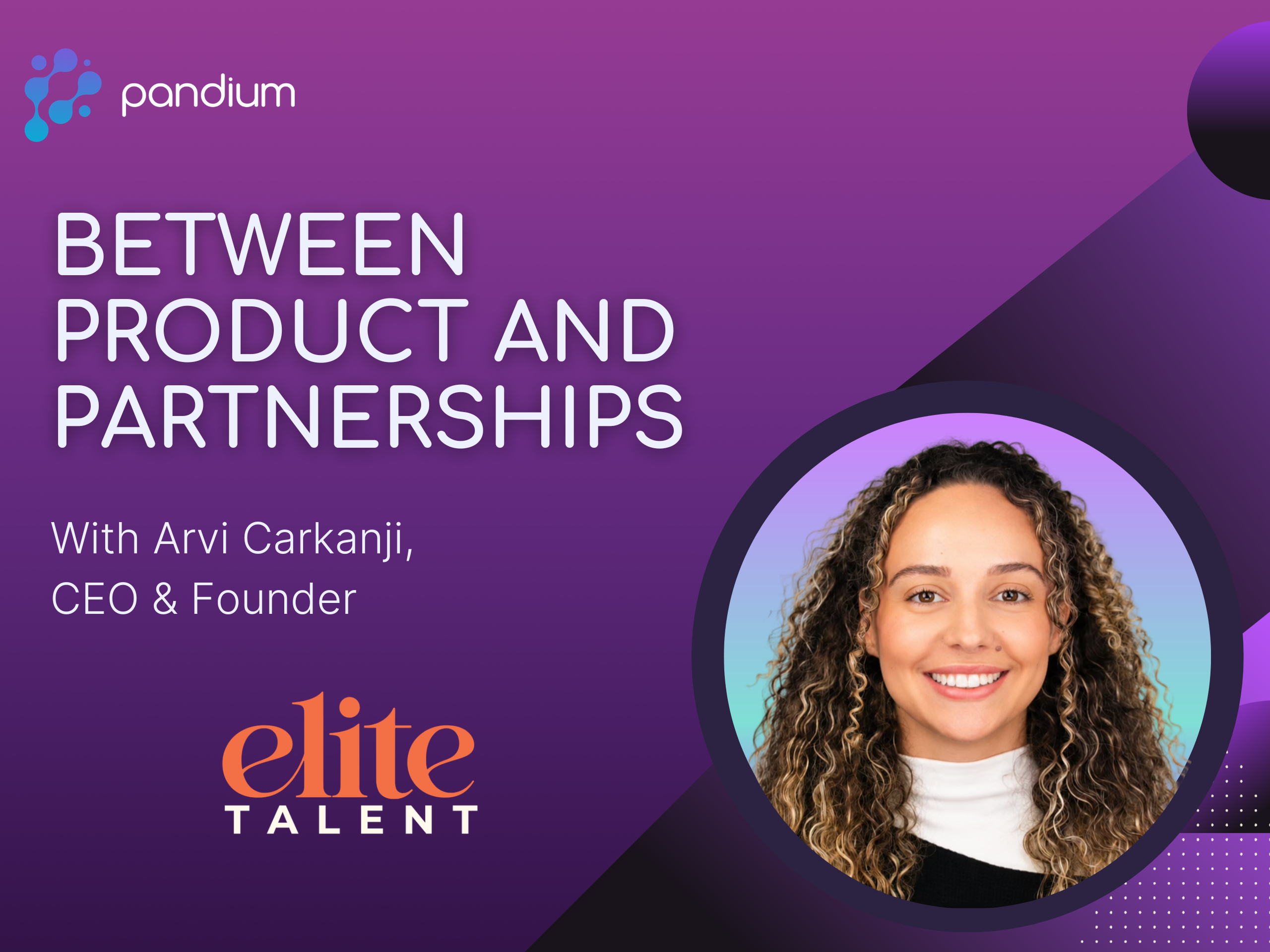
In this episode of Between Product and Partnerships, Cristina Flaschen sits down with Arvi Carkanji, CEO of Elite Talent Recruiting. Arvi's firm places pre-sales and post-sales talent at tech companies. She describes a hiring market that is "very weird" right now. Arvi explains how leaders can write job descriptions that attract the right people and why networking still beats cold applications. The conversation also covers hiring from non-traditional backgrounds and why early-stage companies should think twice before handing interviews to AI.
Who we sat down with
Arvi Carkanji is the CEO of Elite Talent Recruiting, a boutique recruiting firm for SaaS and tech companies. Her team specializes in pre-sales and post-sales talent, including go-to-market and revenue roles. Most of her clients are early-stage startups and scale-ups.
Arvi brings expertise in
- Pre-sales and sales engineering recruiting
- Post-sales and revenue roles
- Hiring for hybrid technical and customer-facing positions
- Job descriptions and candidate screening for early-stage startups
- Networking and job search strategy for candidates
Key Topics
What's Happening in the Hiring Market
Arvi says the market is neither good nor bad. It's weird. With so many candidates looking, "it is an employer's market," and startups are prioritizing domain expertise. By that she means experience in their specific vertical, such as integrations or cybersecurity. Companies would rather hire someone who has done the work before than train someone new.
Engineers Who Can Talk to Customers
Roles are becoming more fluid at companies of every size, enterprise included. Someone in product integration might join a discovery or onboarding call to help close a deal. Arvi's team has recently recruited DevOps engineers for customer-facing roles, where communication counts as much as technical depth. These candidates are hard to find, so Arvi sets expectations with clients early. If the perfect mix of skills is rare, would a strong communicator without customer-facing experience still work?
Cut Your Non-Negotiables to Two or Three
Hiring leaders often arrive with 10 to 12 non-negotiables. Arvi argues that only two or three of them truly can't move, and those are the ones to put in the job description and give to every recruiter. A long list leads candidates who match 80% of it to apply anyway, and hiring turns into a volume game. Cristina adds that junior candidates often read every listed requirement literally and skip roles they'd be great at.
Ask "How" Questions in Interviews
For technical roles, a take-home assessment or a technical round is essential, especially at small startups. For everything else, Arvi relies on "how" questions. How did you handle this? What would you do if that happened? Questions like these show a candidate's thought process and the depth of their experience. Her other trick is to ask the same question two or three different ways. Consistent answers build confidence, and inconsistent ones are worth exploring. Cristina also likes "tell me about a time" questions because they show a candidate's communication style, and she plans to borrow the "how" framing.
Non-Traditional Backgrounds and Company Stage
Everyone in tech had to start somewhere, Arvi notes. Teachers, for example, bring explanation skills that transfer well to tech. Stage matters, though. Seed and Series A companies rarely have formal onboarding, so a career switcher with no SaaS background can struggle there. Arvi advises candidates without domain experience to start at larger companies that are willing to teach the domain, then move toward startups. Cristina adds that a team led by experienced managers can absorb newcomers far better than a team where everyone is still learning. That leads to one of Arvi's favorite pieces of advice. "Follow the manager and the leader, not the logo."
Networking Still Wins
Arvi's top advice for finding talent and finding jobs is networking. She has seen hiring managers move candidates they already know straight to the final round, past every earlier stage. In-person events are back, and Arvi has noticed that the more AI shows up at work, the more people want human connection. For anyone unsure where to start, she recommends free Slack communities for sales, customer success, pre-sales and product integration. Many of them post jobs and host local events. Luma and Eventbrite list plenty of tech events for people ready to show up cold. Applicants can also stand out by messaging someone on the hiring team, since only a small share of applicants ever do.
Working With Recruiters
Arvi explains that recruiters and career services are two different things. A recruiter can only help with the roles they have open at that moment. Her advice is to find recruiters in your niche and talk to several of them. She also suggests treating each relationship like a partner channel that pays off over time. She once placed a sales engineer nearly a year after their first conversation, when the right role came along. Her team searches its own network first whenever a new role opens, so being in a recruiter's network matters.
Why AI Interviewers Backfire for Startups
Arvi warns seed and Series A companies against automating interviews with AI. Big brands like Google or OpenAI can get away with it because candidates will put up with the extra steps to work there. Smaller companies have to sell top performers on joining, and those people have options. Cristina adds that hiring is a two-way relationship, and interviewers learn from the conversation too.
Episode highlights
- 00:27 Arvi's background and Elite Talent Recruiting
- 01:03 How a cousin's job search started a pre-sales recruiting agency
- 03:01 Why the hiring market feels "very weird"
- 05:22 What domain expertise means to employers
- 06:29 The growing need to wear multiple hats
- 07:39 Hiring DevOps engineers for customer-facing roles
- 09:48 Why you should limit non-negotiables to two or three
- 12:02 Asking "how" questions in interviews
- 14:49 Hiring from non-traditional backgrounds
- 18:12 Follow the manager, not the logo
- 19:30 Why networking beats cold applications
- 22:44 How to start networking with Slack communities and events
- 26:03 How to build a relationship with a recruiter
- 28:37 Why AI interviewers hurt early-stage hiring
- 30:59 Final advice for candidates and hiring managers
Tactical takeaways
- Limit non-negotiables to two or three
Put them clearly in the job description and share them with every recruiter. Everything else goes in a separate nice-to-have bucket. - Ask "how" questions, then ask again
Ask how a candidate handled or would handle a situation. Then ask the same question in a different way and check that the answers line up. - Test for AI fluency and independent thinking
Look for people who use AI well and can still work through a problem without it. - Value communication in technical hires
Engineers who can speak with customers and executives are rare and increasingly in demand. If the perfect profile doesn't exist, prioritize strong communicators. - Match non-traditional hires to your stage
Larger companies with onboarding and experienced leaders can support career switchers more easily than an early-stage team. - Follow the manager, not the logo
A strong manager can shape a career more than a famous brand name. - Network before and after you apply
Join a few free Slack communities to get started. After you submit an application, message someone on the hiring team. - Keep humans in early-stage hiring
Startups without a big brand need to sell candidates on the role, and AI interviewers make that harder.
Connect with the Speakers
Connect with Arvi (guest) at www.linkedin.com/in/arvi-carkanji/
Connect with Cristina (host) at www.linkedin.com/in/cristina-flaschen/
Listen to Cristina's conversation on Arvi's podcast at podcasts.apple.com/us/podcast/ep-29-how-integrations-impact-your-pre-sales-and-gtm
--
This podcast is hosted by Pandium, the only embedded integration platform that facilitates faster code-first development of integrations, allowing B2B SaaS companies to launch integrations at scale without sacrificing customization and control.
Learn more about Pandium here: https://www.pandium.com/
To access more resources and content on technology partnerships, integrations, and APIs, check out our blog and resources page below.
Blog: https://www.pandium.com/blog
Resources on Technology Partnerships, Integrations, and APIs: https://www.pandium.com/ebooks
Podcast Transcript
Sarah Elkins (00:00)
Welcome to Between Product and Partnerships, a podcast focused on bringing together product, partnership, and engineering leaders to discuss how to build, support, and scale SaaS ecosystems. This podcast is presented by Pandium, an integration platform for building native integrations.
Cristina Flaschen (00:18)
Hi, everyone, and thanks for listening to our podcast between product and partnerships, where we talk about the challenges and what it takes to build integrations, tech partnerships, and SaaS platforms. And today I'm so excited to have Arvi Carkanji, CEO at Elite Talent Recruiting, join the podcast. Arvi, can you introduce yourself and give the audience a bit of info about your background?
Arvi Carkanji (00:38)
Yeah, first of all, thank you for having me. And props to you for getting the last name right. I know it's hard. Um, but
Cristina Flaschen (00:43)
Yeah.
Arvi Carkanji (00:44)
yes, thank you for for the invite. Obviously, I'm Arvi, I run Elite Talent. It is a recruiting boutiques SaaS company for tech companies, and we help them really we specialize in pre-sales and post sales talent, so anything that falls under that umbrella, including go to market roles and revenue related roles.
And yeah, I mean, honestly, I'm excited to to come in here and to share value for your audience.
Cristina Flaschen (01:08)
And
how did you start your own gig, your own your own agency?
Arvi Carkanji (01:12)
Yeah.
I'll make a long story short, but it was honestly completely random. I was in consulting before. We were helping businesses basically grow and fix gaps that they had. And ninety percent of the problems were always human related. You know, we hired the wrong person. How do we hire right? How do we better fix our, you know, interview process and what kind of talent should we be looking for? What do we hire next, etc.? And
Pre sales specifically, I have a cousin that's a sales engineer and she had lost her job and then came to me and was like, Hey, I lost my job. I know you do some sort of like hiring and recruiting for companies. Can you help me find my next opportunity? And as we were digging into her background and everything, you know, for sales engineers related, I just honestly couldn't find anything related to pre sales as recruiters. Nobody specialized in it and these like technical sales or
technical product, you know, like a mixture of soft skills and technical skills was really hard to find a recruiter that specialized in that. actually I found none. So that kind of lit a little bulb in my head. I I joke around that my husband had to pitch me twice to actually start the business because he saw it before I did that I would be good at it. So and then here we are.
Cristina Flaschen (02:29)
Incredible. And I totally agree with you. I think like
the sales engineering, even title, can mean so many different things at different
Arvi Carkanji (02:35)
I mean, thanks.
Cristina Flaschen (02:36)
orgs. Like in some organizations, it's like someone that does demos, and in other organizations, it's like a full-fledged engineer that comes in to do like a
Arvi Carkanji (02:46)
Exactly.
Cristina Flaschen (02:47)
highly technical sales. So I can only imagine sort of what you what you're dealing with when it
Arvi Carkanji (02:51)
Yeah.
Cristina Flaschen (02:52)
comes to the the variation in the JDs. And hiring is obviously a hot topic right now. I think the market is marketing. So I'd love
maybe just high level, like what is happening in the hiring market from your perspective right now?
Arvi Carkanji (03:06)
Yeah. I like to say like the market is very weird right now. Like it's not good, it's not bad. And when people ask me directly, I'm like, it's always great because I'm a recruiter, I'm always hiring.
Cristina Flaschen (03:16)
Mm-hmm.
Arvi Carkanji (03:17)
I do realize it's weird. I've seen a shift in companies hiring for roles. And I will say depending also the stage that you're in, like the smaller the companies, you know, way different requirements and like scale ups and enterprise companies.
what I'm really seeing is especially for I'm gonna speak from a startup perspective and scale up more so than enterprise, because that's who our typical clients are. But on a startup perspective is a lot of domain expertise requirement. A mixture of, you know, I already need this background to have done this before, versus like I can come in or they can come in and I can train them. So on my perspective, it's a lot of that.
Outside of that, obviously AI curiosity the last two years has been huge. What's interesting though, right now, I'm seeing a little bit of a shift in yes, we want AI curiosity within the person or having used AI, but not rely on it for everything. And I'll give you an example. we were hiring for a role, we're going through screenings because we screen all of our candidates. And one of the questions we asked was, hey, how are you, you know, how would you do this certain sit situation? How would you troubleshoot it or handle it?
And the answer was, yeah, I'd go to Claude. And I'm like, Yeah, that's great. What happens if Claude is not there? And they just couldn't answer the question. So I've seen a little bit of a shift in this end of like, yes, we can be great with AI, but AI can be the driver. So the market is shifting slightly on the AI hiring part as well.
Cristina Flaschen (04:48)
That's like wild to me considering that Claude has not been around for that long. Like it feels like it's ubiquitous,
Arvi Carkanji (04:52)
Right.
Cristina Flaschen (04:53)
but it's only been really like I mean, I guess four years probably, like not even like three, four
Arvi Carkanji (04:57)
Yes.
Cristina Flaschen (04:58)
years. And really, it's been like the last eighteen months to two years that it's become more common. And like the fact that
Arvi Carkanji (05:03)
Agreed.
Cristina Flaschen (05:04)
people are like so reliant on it now is it just goes to show like how ubiquitous it is, I guess, in companies. But I'm curious when
Arvi Carkanji (05:10)
Right.
Cristina Flaschen (05:12)
you say like folks that have experience, are you do you mean are you seeing more companies are requiring domain
expertise in like the vertical that they're in, or more around like the tech stack that they use. I'm just genuinely curious.
Arvi Carkanji (05:24)
Yeah.
Yeah, it's actually I think it's important that we define that. So when I speak on domain expertise, it mainly means the vertical. So like if they're from, you know, like an integration specific company, they ideally want that person to have worked in that type of domain or like identity, cybersecurity, that type
Cristina Flaschen (05:42)
Mm-hmm.
Arvi Carkanji (05:43)
of domain, like greater outreach economy, SaaS product, that type of domain. what I've because of the influx of
candidates in the market and honestly, it is an employer's market. They have the option to choose now and they're prioritizing those types of individuals. Now I'm not saying that's right or wrong, to be clear. I
know you and
Cristina Flaschen (06:02)
Yeah, yeah.
Arvi Carkanji (06:02)
I have had a conversation on this, so we can I'll gladly go there, but that's what they're mostly requiring.
Cristina Flaschen (06:09)
Yeah, we will we will definitely go there in a in a few minutes. But I am curious before we jump to to that spicy topic, on if you're hearing anything kind of like new or different, specifically with leaders around technical positions, or if you think that like the industry is sort of staying the course in those roles.
Arvi Carkanji (06:28)
I would say the biggest difference, which I don't think it's like really new news, honestly, but it's the ability to wear multiple hats. Like even in some enterprise companies now, yes, they're bigger, like obviously everybody's using AI, they are requiring more hats in general and the ability to be more fluid as an individual within the company. So just because you're in product integration doesn't mean you can't go and do
I don't know, a discovery onboarding call or like maybe even join potentially pre onboarding to help close the sales gap, et cetera. So the ability to be more flexible, fluid in terms of wearing hats, I think is definitely become way, way bigger right now.
Cristina Flaschen (07:10)
Do you think that you're finding more folks are looking for like engineers at to your point that can like wear multiple hats but can also be more on the commercial or customer support side of the aisle? That's a thing that I've always thought was like a real superpower. Like even if they're not a pre-sales, you know, like person
Arvi Carkanji (07:27)
Oh sure, yeah.
Cristina Flaschen (07:29)
and like specifically, just like engineers that are interested in talking to customers or prospects, I think is like a real superpower. But I'm
Arvi Carkanji (07:34)
Yes.
Cristina Flaschen (07:35)
curious if you've seen that out in market too.
Arvi Carkanji (07:37)
Yes,
absolutely. I mean, we we've actually done lately some really technical roles like DevOps roles and they want them to be customer facing. So it's been very, very interesting for sure. And definitely a bigger shift as well. I mean, again, it's always been something there, but now it's even more like do they have good communication skills? Can they talk to the CEO and the, you know, the technical person versus like a CRO, et cetera? So yes, that's definitely become more.
Cristina Flaschen (08:05)
How do you find it is recruiting for those types of folks? Like, is it challenging? Is it yeah.
Arvi Carkanji (08:08)
Hard.
For sure. For sure. Yes. A lot more. I think well so we also go into it with the understanding of like, you know, assuming you're coming to us and you're saying, hey, we want a DevOps person engineer that also has good business acumen. Okay, great. The amount of people that can do that is really low. So are we okay with somebody that has not been customer facing but can actually have still good communication skills?
Cristina Flaschen (08:34)
Mm-hmm.
Arvi Carkanji (08:35)
Yes or no, right? And then we be it realistic as well. I I don't
like to give false hope to companies and to, you know, take on a role that's literally impossible or we're looking for like a needle in the haystack because it's gonna be extremely hard. But yes, it's definitely hard. We just make sure that you know our expectations are set up front when it comes to working with the company and we fully understand what they mean versus just like, well, we want somebody that can communicate.
Cristina Flaschen (09:01)
Yeah,
yeah, yeah. Well, if you're listening, dear dear listeners, if there's anyone out there that fits the bill, I'm sure Arvi would love to hear from you.
Arvi Carkanji (09:07)
Absolutely.
Cristina Flaschen (09:08)
A hundred percent. If you're a a DevOps engineer, backend engineer who loves talking to customers, hit her up for sure.
Arvi Carkanji (09:12)
Yes.
Cristina Flaschen (09:14)
So going into into a little bit more of like the brass tacks round hiring for a hard to define roles. I think I said at the at the top that like sales engineering, I think
integration roles, like anything that spans departments, I think could be hard to hire for and also like a little nebulous in the definition. Like you say SE that could mean so many different things, like I mentioned.
Arvi Carkanji (09:34)
many thanks.
Cristina Flaschen (09:35)
So like what do you think to have the maximum success in in recruiting, what do you think a leader should clarify when they open up that type of role?
Arvi Carkanji (09:45)
Yes, I would say the biggest things is the non-negotiables, but I'll dissect that a little bit more. Typically When we're talking to a leader or a leader is looking for a specific person, they have a list of like 10 to 12 non-negotiables, which those are all fair. However, there is probably two to three that you're absolutely not gonna sway on and those should be your top priority that you're always communicating, whether it's working with a recruiter or your internal HR person or even in the job description.
Like if you put your non-negotiables just two to three, people are gonna be more inclined to ideally apply or reach out to you. If they just see, okay, they're non-negotiables, they're literally just two or three things. I don't fit these, I'm gonna move on. But if you do 10 to 12, they're gonna fit themselves in maybe 80% of it, and they're gonna say, Okay, great, I'll just apply because you know I have 80% of it. But they don't realize which one of the two or three you're not gonna sway on.
And then now you create a volume game versus like a precise, good quality candidate game.
Cristina Flaschen (10:48)
Yeah, that totally makes sense. If you've got like fifteen non-negotiables and they're like ranked, it's like, well then they're not actually non-negotiables. It's like
Arvi Carkanji (10:54)
Yeah, but exactly.
Cristina Flaschen (10:55)
it's like the bottom non-negotiables are less important. Well then um
Arvi Carkanji (10:59)
Yes, yeah.
Cristina Flaschen (11:00)
yeah, that totally makes sense. And I've definitely seen, you know, JDs that have
a list of like like forty
things and I'm like, nobody is gonna be able to hit all of these boxes as under the requirements. And I know, especially
in my experience, like more junior folks will read those requirements as being requirements. Like they're looking at that word and saying like if I don't hit every single one of these things, if I have two years of experience and not three years of experience or whatever, they're like not gonna apply. Yeah, yeah, yeah.
Arvi Carkanji (11:26)
Right. So now you're also missing out on good people. Yeah.
Cristina Flaschen (11:30)
It's it's wild out there. Some of these JDs are like very
Arvi Carkanji (11:34)
Are pretty
wild.
Cristina Flaschen (11:35)
They're very expansive. so if we get to back to or when we move to the next step and talk about interviewing, how do you advise folks to interview in like a smart way to kind of get to the core of whether or not someone is good for a role? Like obviously there's like the resume and like an exercise,
Arvi Carkanji (11:52)
Yeah.
Cristina Flaschen (11:53)
can you do it or not? But like what are some tips and tricks?
Arvi Carkanji (11:57)
Yeah, really good question. So depending on the role too, right? Like technical, more technical versus like more soft skills. On the technical aspect, you already mentioned it like a take home assessment or even technical round is like crucial. If they can't perform there, especially if you're a smaller startup, like you're gonna the you're gonna shoot yourself in the foot for lack of a better word. But if the requirement is not so much technical.
I would say "how to" questions are like amazing because you're really trying to dive deep into that person experience. Like, how do you handle this? Well, how did you do this? what would you do if this happened? You can really kind of start understanding their thought process and how they would do certain things and how they would handle. Again, this is where that scenario came in of like, how would you do this? And it's like, well, I go to AI. Okay, great. If AI is not there, what would you do? Right. So you start really understanding
that person's thought process and depth of understanding of the role, how they've done things in the past. And one trick I like to say is ask the same question two or three times, three times even better. And you ask it different ways because ideally you want to see the same answer. But if you're getting different answers, I mean that's I wouldn't say a red flag, but you would want to dive deeper into that.
Cristina Flaschen (13:18)
I like the the framing of like how instead of like tell me about or you know
Arvi Carkanji (13:24)
Yeah.
Cristina Flaschen (13:24)
explain a time, which I I do actually think the like "tell me about a time" or "tell me about a scenario" is also a useful like first kind of question in an interview because it can give you like a lot of insight into how a person thinks. Like how do they express if you're like "tell me about a project that didn't go well" and like you know what you learned from it, like
not only what project do they talk about, but like how do they express that, like what's their cadence and communication style. But I do like the the idea of like a how kind of framing. It's just a slight variation, but I think that's that's interesting. I'm gonna take that with me. I don't know if I use the word how that often.
In our technical screens,
like we definitely do like, how would you do this? But that's much
more tactical, right? It's like, give me like the sort of steps that you would go through if you were doing this versus what you said, like how would you attack this problem or something is a little more open-ended.
And if it's immediately like, you know, I go to Claude, and if Claude's not there, I'm surprised like my follow-up question or like response to that would have been like, And can I use Google? Like if I can't go to Claude, like can I use a book? Like, can I phone a friend? What is, you know.
Arvi Carkanji (14:31)
And those
are all valid answers, but you
Cristina Flaschen (14:33)
Yeah, you get.
Arvi Carkanji (14:34)
know, kind of stumping on it and not having an answer, that's a problem.
Cristina Flaschen (14:37)
I mean, yeah, that is pretty wild. so with all this, we talked a little bit about like, you know, the the sort of recruiting process and interviewing, but we can talk I'd love to talk a little bit about
One
of my passions, and I think we discussed this before, which is diversity in hiring and hiring in non-traditional backgrounds. I'm curious what your experience has been, maybe even how you define like a non-traditional background, and that's you know, language that I've used, but we've talked about this before, you and I offline. How you would define that and
how companies should go about trying to encourage folks to apply,
maybe when they don't have, as you said, like that vertical expertise.
Arvi Carkanji (15:18)
Yeah,
such a good question and it's honestly really hard to answer. So I'll give you some scenarios and to be transparent, it's gonna depend on each company too, like where they're coming from. Now, if we take it all back, it's like nobody would be in tech if we didn't start from somewhere. Like nobody just starts and is an expert in the tech industry or certain verticals. They all need to start somewhere.
If I'm somebody that has no domain background, usually my response is okay, go to bigger companies. Like if you're trying to get really good at you know, the creator space or creator SaaS products or even cybersecurity products, try to aim for companies that are willing to teach the domain, and then you work your way down if startups is your goal, right? And if it's not, then great, continue that.
Cristina Flaschen (16:03)
Mm-hmm.
Arvi Carkanji (16:03)
Um that would be number one. Outside of that, I will say.
non-traditional backgrounds, I mean there's some really good roles like being a teacher and can translate really well into, you know, our world. They're really good explanation explanation people. They can try to get everybody on the same page, right? Especially they're like younger kids. It's way harder. So those roles can be really good transferable skills. But at the end of the day, like
most of the companies we work with are seed stage or series A. Realistically for them and in a way defending my clients too, but realistically for them, they don't have an onboarding. So if you bring on a teacher with no experience in their product or SaaS or knowing how to handle an enterprise sales motion or anything, like they're just gonna crash, hate tech in general and say, what did I just get myself into? I need to leave.
So there are times where I feel like that is a valid requirement. And there's times where it's like, okay, guys, we can like open this up and here's why this would be a good fit to explore. So I think the smaller you are as a company, the more specific and like less you can sway in in terms of the roles, the bigger you are. You can absolutely open it up and get more space for non-traditional backgrounds.
Cristina Flaschen (17:26)
Do you also think it has something to do with maybe the like leadership experience or maybe not like management experiences in the team? Because I do like,
Arvi Carkanji (17:33)
Or I share.
Cristina Flaschen (17:34)
you know, if you've got someone that has, you know, 20 years of experience, they may be able to absorb somebody that has
Arvi Carkanji (17:43)
Yeah.
Cristina Flaschen (17:43)
no experience in the space better than even at a small scale, right? Like better than somebody that has two years of
Arvi Carkanji (17:48)
Yeah.
Cristina Flaschen (17:49)
experience and is still learning a lot on the job, right?
Arvi Carkanji (17:52)
Absolutely. Actually I have a kind of like a funny expression that I like to say, but it's go after or follow your manager, not a logo. Like a lot of companies are like or A lot of candidates are like, well, I want to get into like the, you know, the AI or open
Cristina Flaschen (18:05)
Mm-hmm.
Arvi Carkanji (18:05)
AI or Claude, like work for them because the logo is great. Yes, but you don't know the manager that's behind those roles. So follow the manager and the leader, not the logo. The experience and learning curves that you can go through with a good manager or a good leader
can be immense to your career. Honestly can make or break your career because you tend to take after the same skill set that they give you as well, or the same leadership thought processes, et cetera. So when you learn from somebody really good, it can absolutely make your career.
Cristina Flaschen (18:37)
I totally agree. I think
I've had the opportunity to work with people more than once, not in a full-time kind of role, but through like other other types of projects.
Arvi Carkanji (18:46)
Yeah.
Cristina Flaschen (18:46)
And it's really fun too when you get to like bring the team back together, you know, and like and have that. I hate the word synergy, but like have those synergies. Um so
Arvi Carkanji (18:51)
Yes, yeah. For sure.
Cristina Flaschen (18:57)
Where are employers in a world where there's so many folks in market, like where are they finding strong candidates beyond just posting a job on LinkedIn?
Arvi Carkanji (19:09)
You're gonna hate my answer, but it's gonna be networking.
Cristina Flaschen (19:13)
I mean I love networking, but I know it's a lot of legwork.
Arvi Carkanji (19:17)
Yeah, that's the problem, is it does take a lot of time. It's not an immediate return. And especially nowadays our curve for like ROI is like so little, like we want to see immediate results. And then people go to, you know, applying and then they
applying to a hundred jobs and they get discouraged. But really what I've seen is huge right now is networking. I mean, even roles that I work, hiring managers will literally make people just because they know somebody from prior or they met them somewhere and they had a great conversation, they will let them skip all four stages of interview and just go straight to the final round. Like how can you beat them? You can't. So networking is huge. I mean, events right now have become really big.
Everybody's kind of going back post-COVID to events and in like it's funny enough, and the more AI we get, the more human connection we're attracting right now. So going to events, networking, there's so many free ones, especially in big cities, like if you're somewhere like in New York City, I mean you can probably spend all day networking from like nine to five, which is exhausting, but how bad do you want it is the second question. So networking would be the biggest thing.
Outside of that, I will say, even if you're applying, because you can still get jobs applying, yes, more rare and more hoops to go through. But you have to be willing to go beyond the job posting. Reach out, you know, if you have a job posted, if they reach out to you, to Sarah, somebody else on the team, wouldn't you be more inclined to actually have a conversation with them versus not? And funny enough, it's because everybody when I say that to candles, they're like, Yeah, but they'll probably get so many messages.
How many messages have you gotten? I mean, I'll ask you, I don't know if you've applied for a job, how many messages do you get from candidates that have applied for a job? Is it all of them? Is it like 10% maybe two, three people? Exactly
Cristina Flaschen (21:07)
Not even not even ten percent. Yeah, just like a handful.
Arvi Carkanji (21:10)
Exactly my point. So just doing the step of reaching out already puts them at top 10%, and you'll probably be more inclined to reach out to them than not.
Cristina Flaschen (21:19)
Yeah, the the networking thing I think is so real. I was just chatting with somebody who was on the hunt and just got an offer and they were musing about how like the cold applications that they had sent in were so it was just such a huge waste of time. And like every single warm intro ended up with like at least going through a process. Some of them resulted in offers, but like you at least got a response, which I think is also, you know, part of the battle in this day and age.
I'm curious, like
And this maybe isn't a fair question, for someone listening that's like, I need to be networking, but I don't know what that means. Like, obviously there's events, but people go to event and like what you do at an event? Like, what would you
Arvi Carkanji (21:58)
Yeah.
Cristina Flaschen (21:58)
what would you recommend? How do folks start? If they're like, let's say you're like, you're a CX person and you wanna get into like sales engineering or something like that, you wanna make a move and you work in tech, but like in like a medium-sized city, like what do you how do you start?
Arvi Carkanji (22:13)
Yeah.
I'm so happy you asked that question because I was gonna dive a little bit deeper into it.
Cristina Flaschen (22:17)
Yeah, yeah.
Arvi Carkanji (22:18)
So, first of all, before you even go to events, we have so many communities online now, like Slack communities that are free. Like there's one like women in sales. I mean, how much better can you get if you're women in sales? there's a CX community for like customer success. There's pre-sales community. I'm sure there's like product integration communities because we all go through the same pain points.
So somebody nowadays is like, okay, I can start a free Slack and just put a bunch of us together and network.
Cristina Flaschen (22:42)
Mm-hmm.
Arvi Carkanji (22:44)
There's also paid communities, which I'm also part of some of them. And you already kind of have a leg in. These communities throw events all the time. So if you're like scared to go to an event like brand new, not knowing anybody, start with some free communities. Honestly, Claude, this is where Claude and AI and ChatGPT can all come to play because you can search them and ask them and they'll bring up some of those communities.
Start there, introduce yourself, see if anybody's having any events in the city. I reach out to people for one-on-one coffee sometimes. I'm like, hey, I'm in Miami area. I saw you're in the same community as me. Would you like to have a quick chat? Starting small like that is a great way. Most of these communities also have a job posting channel on there where companies will post jobs.
That's your weight in like a warm intro, like referral, right? That's another step to it. Is instead of you applying for that job, now you say, Hey, I'm from so-and-so community. Saw you posted this, I applied, here's my resume again. Can we have a chat? Does this feel like a good fit for you guys? So starting with like Slack communities and then growing from there. And then if you want to go cold because you're like, I don't care, I'm a great people person, just go on Luma. there's Eventbrite but Luma is the one with
the most tech events. But Eventbrite, like so many other ones that just haven't sign up, show up, have conversations.
Cristina Flaschen (24:05)
Luma is crazy. And there's so many of these these platforms now too. Like Partiful is another one. I'm just like, I'm getting invites from all these different places. It's like crazy.
Arvi Carkanji (24:14)
I bet you probably get
a lot from being in New York City too. So many.
Cristina Flaschen (24:17)
there's there's so much. Like I don't
Arvi Carkanji (24:19)
Yeah.
Cristina Flaschen (24:19)
yeah, I don't go to as many as exist, but there's so so so many. I think like one other piece of advice I'd give folks if it's like it feels scary to just like walk into like a room is like bring a friend, even if they're not like in the space.
Arvi Carkanji (24:32)
Actually I would advise
against that because if you're an introvert and you bring a friend, the chances of you talking to other people are very, very low. So you can really put yourself on that.
Cristina Flaschen (24:40)
Yes. I'll agree I will
say yes and you also have to like be able to speak to other humans. I will agree. You don't want to like stand in the corner the entire time. but I could totally
Arvi Carkanji (24:48)
Agreed, yes.
Cristina Flaschen (24:50)
see like just showing up cold to like a room of 60 people that you don't know, like can feel overwhelming. Um
Arvi Carkanji (24:58)
yeah, yeah.
Cristina Flaschen (24:59)
and yeah, I guess if you have a friend that's also job hunting or something, that's even better because you're both incentivized to like go out and and talk, or if they're recruiting for something, right?
Speaking of recruiting, so we're coming up on time, but I want to make sure we can talk about what you do a little bit more. I'm gonna guess there's probably people listening to this that are gonna be on the market if they're not already on the market, just given how the market is right now. So how should folks build a relationship with a recruiter or someone like you? And what should they, as an applicant, what should they expect?
Arvi Carkanji (25:25)
Such a good question. So one thing to understand is not all recruiters like myself are career services and recruiters. Like they're two different things. So we have like some jobs, we don't have all the jobs and it really what I like to say is for a recruiter like even like myself or recruiters that don't do career services, it's very situational. And it really depends what I have at hand at the time for me to be able to help somebody directly the moment I speak with them.
Number one is you should find recruiters within your niche. A lot of recruiters specialize, whether it's like go to market or revenue or technical roles or pre-sales or you know, things like that. So go to niche recruiters for the roles that you're looking for. Two is you should cast a wide net. I mean, you should talk to a lot of recruiters, not just one, because everybody has different opportunities. And three is realize that it's like a
partner channel, like for lack of a better way to explain it, but it's like a partner channel. It might not produce results right away, but I might have a role that fits your background and your experience in two weeks, three weeks, could be six months or next year. And timing might happen, let it be right. And obviously we end up working together. That's happened so many times to me with candidates. That's how I place actually a sales engineer. When I reached out to him, he was like, I reached out for a technical role and he was like, nope, I want to get into sales engineering.
Gave me his resume and literally a year later, I was like, Hey, I have a company, they're looking for exactly your background. Can we have a chat? It's an SE role, they're willing to train it. And like obviously it worked out. So just realize that it might not be a direct return, but putting yourself out there. And honestly, I mean, most recruiters, even myself, our ATSs have AI's components into it. So when I start a new role, as long as you're in my
kind of internal community per se or internal network, we start with like who do we know that could be a good fit for this role? What networks do we have? What relationships have we built? And then we cast the white net from there and go to headhunting, et cetera. So either way super important to be in and a recruiter's network.
Cristina Flaschen (27:30)
Again, the networking. It's always it just comes back to humans, man, every time. Cool I
Arvi Carkanji (27:32)
It I know. Weird 'cause
we're trying to replace humans with AI, but
Cristina Flaschen (27:38)
I know. But have you seen
all like the social media posts of people messing with the AI interviewers? There's so many good videos. Yeah, where they like they manage
Arvi Carkanji (27:46)
my gosh, I just saw one the other day and that was funny. That w yeah.
Cristina Flaschen (27:51)
to like get them stuck in a loop or something. yeah, it's
Arvi Carkanji (27:55)
Also
horrible idea since you're in this topic for smaller companies, specifically their Series A, to go with AI interviewers. Not because I want them to hire me, obviously I would love that, but because you don't have the logo or the name, like you need to sell people into working with you. If you're Google or OpenAI or yes, go ahead, use all the AI and views in the world because people will have more patience to go through them because they want to work for those companies.
But if you don't, if you're not one of those one like even Lovable, right? Like Yes, go ahead, use that. If you're not one of those companies, horrible idea to automate your entire hiring process with AI.
Cristina Flaschen (28:35)
I also feel like you probably want like the experience, like as the interviewer, like kind of
Arvi Carkanji (28:41)
Absolutely.
Cristina Flaschen (28:42)
under even if you're like a well-seasoned interviewer and like hiring manager, it's still good to like get that feedback. And I don't know.
Arvi Carkanji (28:49)
yeah.
Cristina Flaschen (28:49)
I feel like recruiting and an employment too is like a relationship, right? And like we're both getting something out of this, and
both sides should be respectful of the other. Like, and the I have not had a personal experience with the AI, like interviewer things.
Arvi Carkanji (29:04)
no me neither.
Cristina Flaschen (29:06)
But I've seen enough videos, I think, that I kind of generally get the vibe. And like, I don't know if I would sit through that, to be honest, like myself personally. I'd be like, you what, this is not the fit for me. Like, if you can't devote some time.
Arvi Carkanji (29:11)
Yeah. yeah. Absolutely.
You're trying to hire top performers. How many of those do you like top performers will have options in this market and they're well compensated? Like if they're if you're I mean, everybody wants to be begged a little bit, like, come work for me, like let me tell you why we're
Cristina Flaschen (29:31)
Yeah, yeah.
Arvi Carkanji (29:31)
so great. And I think as founders, I mean including myself in this, but I'm sure you too and all other founders.
We think our product or services are always the best and like we shouldn't be able to sell them, but it's actually the opposite. We need to sell them first, especially top performers, get them hooked, and then you know, we can reverse the we can reverse it to them.
Cristina Flaschen (29:53)
Yeah. Yeah, I don't know. The videos are also creepy. Like those the weird like bots seem very uncanny valley.
Yeah.
Arvi Carkanji (30:00)
That they're just always nodding their head and smiling.
Cristina Flaschen (30:03)
And like repeating back what you just said, like it's so bizarre. Well we're
Arvi Carkanji (30:06)
Yeah.
Cristina Flaschen (30:06)
coming up on time. Any final words of wisdom for anyone looking to hire or looking for a new role?
Arvi Carkanji (30:12)
Yeah, I leave you with this on the candidate side, especially if you're looking for a role. Communication skills. I mean, it's more important than ever. There's so many YouTube videos nowadays that can teach you also communication skills or how to present yourself in an interview process. So that would be huge. On the hiring end, I would say really, really qualifying, like what a great candidate looks for you.
Like we talked about, you know, no your non negotiables, don't make them ten, twenty non negotiables. Really make your top two to three ones and then put everything else in a different bucket. And you probably won't deal with like thousands of applications. You might deal with like a hundred, which is way better and more precise.
Cristina Flaschen (30:55)
Awesome. Well, thank you so much for spending time with us, Arvi. Where can folks find you if they want to get in touch because they're looking for a role or they're hiring for a role?
Arvi Carkanji (31:02)
Thank you for asking. LinkedIn is definitely the best. A R V I is my first name. I don't know how many Arvis are out there, so I think you'll be able to find me, but C A R is what my last name begins with, so that might be a little bit easier.
Cristina Flaschen (31:16)
Amazing. We will link in all the places that we post this. Dear listener, thanks so much for joining us for another edition of our podcast. Arvi, thank you for joining. And if anyone is interested in more information about integrations, APIs, hiring, security, we got all kinds of stuff here at pandium.com. Check out our blog, check out the podcast, check out our YouTube channel. We've got some pretty good spicy shorts on there as well. And Arvi, really great chatting with you again. And I'm sure I will see you out there.
Arvi Carkanji (31:44)
Absolutely. Thank you so much for having me. And maybe you should put on the show notes our podcast because you we went really deep on integrations and Pandium and all that. So that might be useful.
Cristina Flaschen (31:53)
Yes.
Yes, we will include that as well. We'll do some cross linking.
Arvi Carkanji (31:58)
Love it.
Cristina Flaschen (31:58)
Thanks again. We'll chat soon.
Sarah Elkins (32:00)
Thanks for listening. If you enjoyed our content, subscribe to our channel and give us a thumbs up. For more content on tech partnerships, integrations, and APIs, check out our articles, eBooks, and other resources in the description or visit Pandium's website.